Last updated: September 17, 2026 · 10–12 minute read
Cushion Foam Density and Firmness: What Commercial Buyers Should Specify
Foam density is useful information, but it cannot by itself predict how a commercial cushion will feel or perform. Buyers need to assess density alongside firmness, thickness, layering, cover tension and the furniture support system.
Foam, cover and finished thickness must be evaluated as one seat-cushion system.
Quick answer: what do density and firmness mean for custom cushions?
Density describes how much material is present in a foam volume; firmness describes the resistance a user feels under compression. They are related but not interchangeable. A finished seat cushion’s comfort, profile and recovery also depend on thickness, layering, wrap, cover construction and the deck beneath it. Specify the desired application and validate the complete sample.
For B2B purchasing, the better question is not “What density is best?” It is “What foam build gives the right support, seat height, appearance and service behaviour on this frame, for this user and cleaning environment?”
1. Separate density from firmness
Density is commonly used when discussing foam consistency and material content. Firmness is the immediate support sensation under load. Two foams can have similar density and different firmness; two cushions can use the same foam and feel different because one is thinner, layered differently or placed on a solid rather than flexible support.
Ask the factory to state the foam type, density and firmness where applicable, then describe the finished build: thickness, wraps, layers, cut shape and intended position. Use clear units and supplier references rather than a generic “high density” claim. If a project has performance requirements, agree the testing scope and relevant evidence with qualified parties before bulk production.
2. Start with the intended seat or back application
Seat cushions, back cushions and decorative pillows have different jobs. A commercial seat cushion typically needs support and profile retention under repeated use. A back cushion may prioritise comfort and conformability. A decorative pillow needs loft, shape and recovery after packing. Do not copy a seat specification into a back cushion simply because the visible cover is the same.
Describe the user, traffic, expected sitting duration, finished seat height and supporting furniture. A short-stay café chair, restaurant booth, hotel lounge and deep outdoor daybed can need different builds. The first sample should be tested on a comparable frame, not a workshop table. Our hospitality materials guide explains how cover and frame affect the result.
3. Include thickness and the support deck in the specification
Thickness changes both comfort and geometry. A thicker foam can allow a different support feel, but it also changes finished seat height, edge profile, fabric consumption and packing. The support deck below the cushion—solid board, slats, webbing or sprung base—also changes how the same build behaves. Record it in the product brief.
For fitted bench cushions, confirm the intended finished height with the cushion installed. For a sofa or lounge cushion, assess the profile after normal sitting. If the product has a bottom board, non-slip underside, channels, bevels or cut-outs, show them in the drawing. These are part of the functional construction.
Foam build fields to approve
- Foam type, density and firmness where specified by the supplier.
- Finished thickness, layers, wraps and edge treatment.
- Seat, back or decorative use; frame/support deck description.
- Cover fabric code and whether its tension changes the finished profile.
- Measurement points, comfort review result and sample revision number.
4. Use layering only where it serves a defined result
Layering can help balance support, initial hand feel and appearance, but it should not be used as vague complexity. Explain what each layer does and approve it in the sample. A fibre wrap may soften the visual edge under a cover; a different core may provide structure; a backing or underside can influence stability on the frame. The buyer should know the finished sequence, not merely that the cushion is “multi-layer.”
For outdoor products, consider moisture handling as part of the core decision. A foam or filling approach must work with cover, seams, underside and drying routine. See our quick-dry construction guide rather than assuming an indoor seat build will suit exposed furniture.
5. Validate comfort and recovery through the approved sample
Review the full cushion on its intended support. Check initial feel, seat height, edge stability, cover tension, shape after normal use and recovery after unpacking where relevant. Ask several appropriate stakeholders to review the sample if a project has design, operator and purchasing priorities. Record the agreed build and any changes in a controlled specification.
Do not base approval on a loose foam block. A block does not show the effect of finished thickness, cover stretch, seam placement or furniture deck. For long benches and sectional cushions, review profile consistency across adjacent pieces. For retail pillows, inspect loft and recovery after the proposed packing method.
6. Translate approval into production checks
Factory testing and quality control should compare bulk work to the approved reference. Confirm incoming foam or fill codes, finished cut dimensions, layer sequence, wrap, cover fit and completed cushion thickness at agreed points. First-off review should happen before the main production run is too far advanced.
At shipment inspection, check a defined sample of finished cushions for dimensions, visible workmanship, fill distribution, cover tension, labels and packing. Give any third-party inspector the golden sample, approved build sheet and defect definitions. This makes inspection a practical check rather than an opinion about comfort.
PROJECT SUPPORT
Need a foam-build discussion for a commercial seating project?
Send your furniture type, cushion dimensions, intended use and comfort objective. We will help structure the information needed for a representative sample.
Request a Foam-Build Discussion →7. Common foam-specification mistakes
- Using “high density” without a named foam build or functional requirement.
- Confusing density with firmness or comfort.
- Ignoring thickness and support deck.
- Approving a loose foam sample instead of a completed cushion.
- Using one build for seats, backs and pillows without reviewing their different roles.
- Omitting layer sequence and measurement points from the production reference.
Create a seat-feel decision record
Comfort is subjective, but the approval process can be disciplined. During sample review, ask the project team to describe the target experience in practical terms: supportive for short dining use, relaxed for lounge seating, stable at the edge, easier to rise from, or soft for a back cushion. Record the frame, finished thickness, cover and fill build used in the review. This gives the factory an actionable reference instead of an unmeasurable request for “more comfortable” foam.
Where several stakeholders are involved, collect feedback in a consistent order: initial feel, support after sitting, edge profile, seat height, cover tension and recovery. Note who reviewed the sample and what seating condition was used. This is not a laboratory claim; it is honest project experience that guides the next controlled sample or first-off decision.
Compare alternatives without changing several variables at once
If the team needs a firmer or softer result, change one defined component at a time where practical: firmness, thickness, wrap or support deck. A sample that changes cover fabric, fill, thickness and frame simultaneously gives little useful evidence about why it feels different. Keep alternative samples labelled with the exact build and review them on the same furniture.
For commercial seating, balance initial hand feel with profile and maintenance. A build that feels ideal in a short sample review may not be appropriate if it changes finished seat height, makes a cover difficult to re-fit or creates an edge profile inconsistent with the design. The decision record makes these trade-offs visible.
Protect consistency in production and reorders
Once a build is approved, retain a construction description and sample photo with the SKU. Incoming material checks should confirm the stated foam or fill reference; first-off review should check finished thickness, profile and cover fit; shipment inspection should use agreed measurement points. If a supplier proposes a material change, review it as a new build rather than assuming similar density or appearance gives the same result.
For reorders, review feedback from the installed product before repeating the exact build. This lets the buyer retain a successful seat feel or make a documented improvement based on real operating experience.
Define comfort through the finished seating system
Foam density is only one input to seat comfort. The person sitting on a cushion experiences the relationship between thickness, foam type, layer arrangement, cover tension, board or furniture support, body position and duration of use. For that reason, a buyer should describe the desired application before requesting a density number: occasional decorative seating, dining, a hotel lounge, a restaurant booth, a window bench or an outdoor chair each place different demands on support and recovery. A material specification without finished dimensions and furniture context can lead to misleading comparisons.
Use a representative sample to evaluate the complete build. Sit on it in the intended furniture and inspect its appearance before and after normal use. Agree the measurement points for finished thickness, the preferred initial feel and any visible recovery expectation. Avoid promising a universal service life or comfort result, because use intensity, user weight, environmental conditions and the underlying frame vary. The credible goal is a documented sample decision that production can repeat, not a vague label such as “high density” without a defined construction.
Record the foam specification in purchasing language
Once a sample is approved, convert its build into an unambiguous product file. Record the foam grade or supplier code, nominal density where applicable, dimensions and tolerance, layer sequence, wrap or liner, insert orientation, cover construction and any other support component. For a fiber-filled or hybrid cushion, state the fill type, approximate finished requirement and how it is distributed. Do not replace an approved material merely because another option has a similar headline density; compression behavior, resilience and compatibility with the cover can differ.
During pre-production, confirm availability of the approved material and identify any proposed alternative early. If a substitution is necessary, review it against the customer requirements and determine whether a new sample or written approval is needed. At first-off inspection, check the actual finished cushion against the approved thickness, fit, visible shape and support feel. The purpose is to manage the features a buyer can evaluate, while recognizing that laboratory terminology alone does not define the entire seating experience.
Plan the handling and receiving conditions
Foam and filled cushions can change appearance temporarily after compression packing or transit. The buyer should understand the proposed packing method and allow a sensible recovery period during receiving or installation preparation before judging the finished look. Keep cushions dry, remove packing according to instructions and avoid storing them under heavy loads that may distort their intended shape. If a concern remains after normal recovery, compare it with the approved sample and documented specification rather than an unrelated product image.
For commercial projects, retain a sample or detailed approved photographs and log any recurring field feedback by SKU and location. This makes it possible to distinguish a fit issue, maintenance issue or comfort preference from a repeatable construction question. A disciplined approach to foam selection therefore connects buyer evaluation, factory material control, shipping practice and future replenishment—exactly the information a B2B team needs to make a considered decision.
Make comfort approval reproducible for the next order
During sample approval, write down how the cushion was evaluated: the furniture used, finished thickness, insert orientation, cover material, users’ observations and the condition after ordinary seated use. Keep a dated photograph of the approved piece from the same angles used for later checks. This does not turn comfort into an exact laboratory number, but it prevents a repeat order from being judged against an unrecorded memory of the first sample.
On a new production run, compare a first-off piece with that reference before bulk packing. If the factory proposes an alternative foam or fill, ask for its exact code and a clear explanation of what is changing. Decide whether a physical comparison or customer approval is required. The same record supports receiving after transit: allow the intended recovery time, check the finished product against its approved build and capture any concern by SKU rather than treating all soft furnishings as interchangeable.
Include foam checks in the receiving plan
Before goods arrive, tell the receiving team which carton labels identify each seat or insert and how the cushions should be allowed to recover after unpacking. Inspect a representative selection against the approved sample record: finished shape, thickness at the agreed point, cover fit and correct location. If a concern is found, retain the carton and SKU reference with photographs before the item is installed or discarded. This preserves a clear link between the delivered product and its production record.
Conclusion: buy the finished support system
Commercial buyers should specify foam as part of a complete cushion system. Define the application, name the build, include the frame, test the finished sample and inspect bulk work against that reference. This produces clearer communication and a more credible route to the intended comfort and appearance.
Photography plan for this guide
Use original factory photography where possible. The prompts below are production references for realistic imagery, not claims about a specific order.
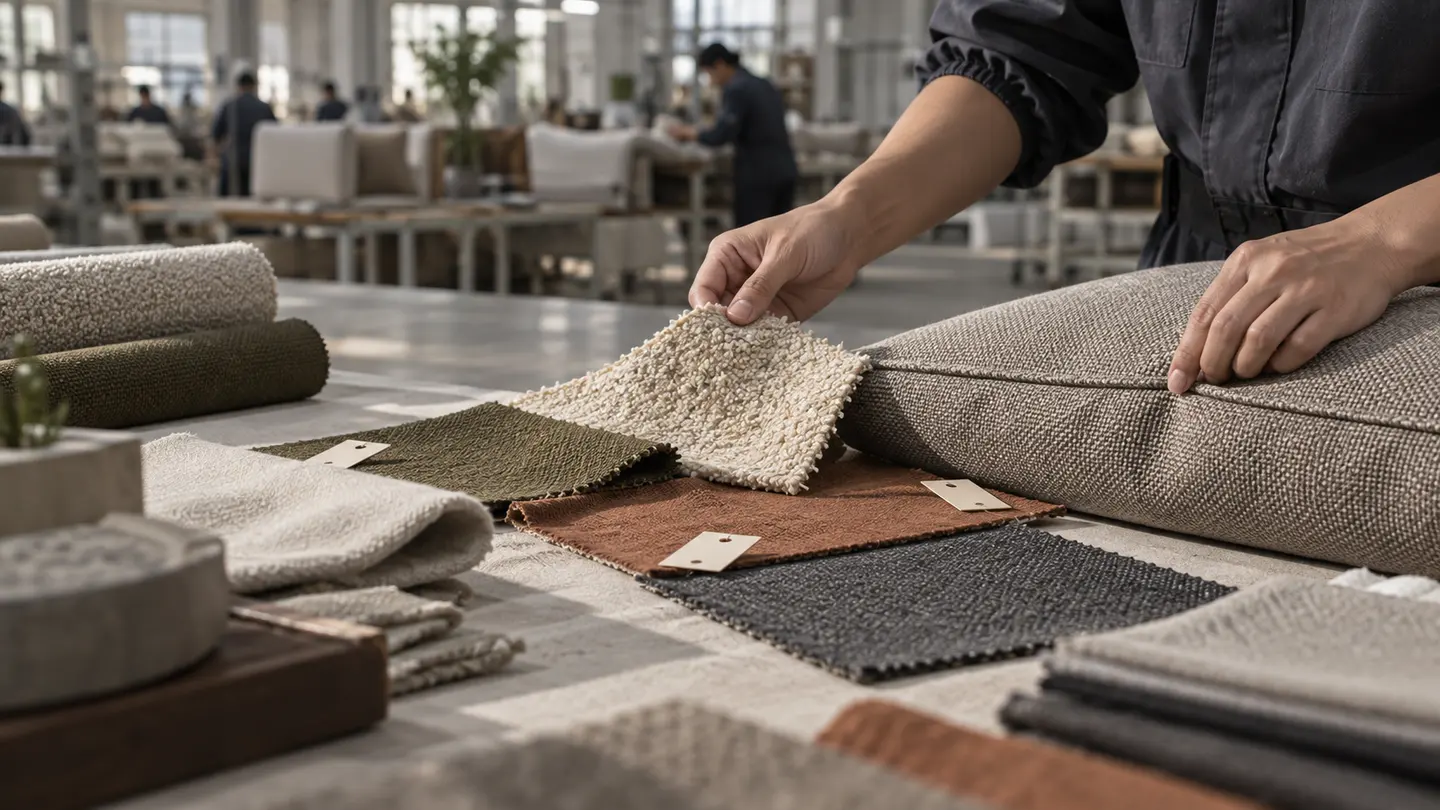
Position: Below the introduction
Caption: Foam, cover and finished thickness must be evaluated as one seat-cushion system.
AI prompt: Photorealistic premium product photography of a tailored commercial seat cushion with a subtle cutaway revealing structured foam layers and woven upholstery cover, clean neutral background, soft studio daylight, authentic materials, no logos or text.
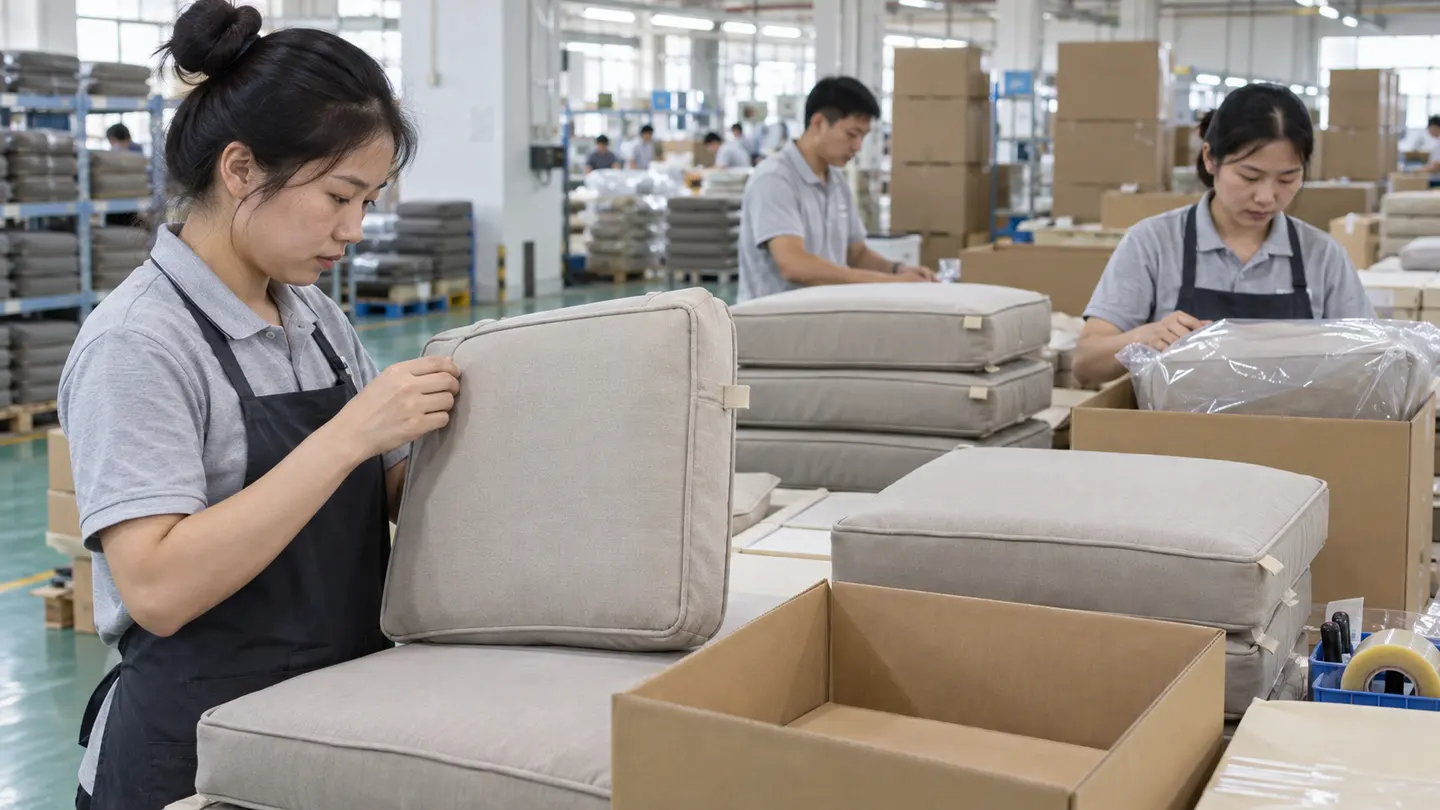
Position: After “Translate approval into production checks”
Caption: A technician checks finished thickness and cover fit against the approved build sheet.
AI prompt: Realistic documentary Shenzhen factory photo: Asian quality inspector using a measuring gauge and tape on a finished custom seat cushion, visible upholstery seams and neutral foam reference, clean worktable, natural industrial lighting, no readable text or logos.

Position: After “Start with the intended seat or back application”
Caption: The appropriate foam build is reviewed on the type of furniture it will support in service.
AI prompt: Photorealistic boutique hotel lounge with tailored custom seat and back cushions on premium furniture, warm natural interior light, refined commercial design, no people, no logos, realistic upholstery texture.
Frequently asked questions
Is higher foam density always better?
No. Density is not a complete comfort or durability answer. The appropriate build depends on firmness, thickness, layering, cover tension, frame and intended use; validate the assembled sample.
What is the difference between foam density and firmness?
Density relates to the foam material content, while firmness describes resistance under compression. They should be specified together with the complete cushion construction.
How do I choose foam for a restaurant booth?
Define traffic, desired seat height, support deck, comfort and cleaning needs. Review the proposed seat cushion on the actual or comparable booth before bulk approval.
Why does the same foam feel different on different furniture?
The thickness, cover tension and support deck can change how users experience the same foam. A solid panel, webbing and sprung base interact with the cushion differently.
What should be in a foam quality-control checklist?
Include foam or fill codes, cut dimensions, layer sequence, wrap, finished thickness, cover fit, fill distribution and comparison with the approved sample.
Enquiry popup plan
Trigger: Show after 40% scroll, after 30 seconds on page, or on desktop exit intent; suppress after a completed submission.
Popup title: Review your cushion foam build
Copy: Share the furniture, use level and desired comfort. We will send the build details to clarify before sampling.
Fields: Required: Name, Email. Optional: Company, Project Type, Message. Do not request a phone number.
Button: Request Foam Review
Specify the support behind your custom cushion
Email info@cushionnook.com or use the enquiry form to discuss a sample-ready foam, cover and construction brief.
Get a Quote →