Last updated: September 17, 2026 · 10–12 minute read
How Quick-Dry Outdoor Cushions Are Built for Hospitality Projects
Quick-dry outdoor cushions are not created by one fabric choice. They are built as a moisture-management system that accounts for cover, seams, filling, drainage, air movement and the operator’s weather routine.
Quick-dry construction begins with the actual exposure and operating routine of the seating area.
Quick answer: what makes an outdoor cushion quick-drying?
A quick-dry outdoor cushion is designed to avoid retaining water and to allow air to move through the complete construction. The cover, seam and zipper layout, internal filling, underside, vents or drainage, cushion orientation and care routine all affect the drying result. A water-shedding face fabric may help, but it does not make a slow-drying core dry quickly.
For hotels, resorts and commercial terraces, specify the expected exposure and recovery time operationally. Decide whether cushions are collected during rain, left on furniture, stood upright to drain, or placed in a drying area. Then approve a sample with the same construction that will be used in bulk.
1. Start with the water path
Every outdoor cushion should be reviewed by asking two practical questions: where can moisture enter, and where can it leave? It may enter through the cover surface, seams, zipper line, decorative details or underside. It can remain in a dense core, trapped behind a backing, or between a cushion and a non-ventilated deck. It leaves through evaporation, air flow, drainage routes and correct positioning by staff.
A factory should be able to explain this path using the proposed finished construction. If the answer relies only on a fabric name, the design review is incomplete. Photograph and retain the internal construction of the approved sample where relevant so that the buyer, factory and inspector share the same reference.
Exposure information to include in the brief
- Covered, partially exposed or fully exposed seating location.
- Rain frequency, pool splash, sea air, humidity and direct-sun conditions.
- Furniture deck type: slats, mesh, solid board, webbing or ventilated frame.
- Whether staff collect, rotate, stand up or store cushions after weather.
- Expected dry-out window before the seating must be used again.
2. Select cover material for the actual environment
Outdoor cover fabric should be selected by its exact supplier, construction, finish, colour method and care guidance. The project may need a fabric that sheds light water, tolerates UV exposure, has a certain hand feel or supports an operator’s cleaning routine. None of those properties alone tells you how the completed cushion dries.
Review larger fabric cuttings outdoors, not just indoors under sample-room light. Check texture, colour, seam behaviour and how the fabric fits over the proposed filling. For a comparison of common outdoor upholstery categories, see our acrylic, olefin and polyester guide. Use specific material information rather than broad fibre claims.
3. Specify the filling and core construction
The internal fill often determines whether a cushion feels usable after rain. Foam, fibre and layered constructions behave differently when wet and compressed. A quick-dry approach may use a core selected to promote water release and air movement, but the right choice depends on comfort, profile, exposure, cover construction and cost. Avoid assuming a material name guarantees a dry-out time in every climate.
Record the finished thickness, layering, wrap or batting, any internal channels and the support beneath the cushion. A thick lounge seat can need a different system from a thin dining pad. Inspect the sample after normal compression, because the way water and air move through the core can change when the cushion is loaded on furniture.
4. Design seams, closures and underside for drainage
Seams and zippers are functional details, not afterthoughts. A zipper can provide valuable cover access, but it should not sit in a location where rain naturally pools. A piping join, button or strap attachment may create a local pathway for water. The underside should work with the furniture deck and not seal the cushion against a surface where moisture can remain.
Depending on the product and exposure, the development team may consider placement, protective flaps, suitable underside construction, vents or drainage features. The goal is not to add every feature to every cushion; it is to choose a coherent set of details for the specified weather conditions. Our waterproof versus water-resistant guide explains why cover claims should be separated from whole-cushion behaviour.
5. Test the complete sample in relevant conditions
Factory testing for a quick-dry design should begin with a controlled sample review. Confirm material codes, cover construction, zipper orientation, fill build and underside before bulk production. If the project needs a particular wetting or drying assessment, agree the method and acceptance criteria in advance with the buyer and, where needed, a qualified laboratory. Do not infer a finished-cushion result from an unrelated fabric test.
For an internal project assessment, document what was done, under what conditions and what was observed; do not overstate it as a universal performance claim. Use the outcome to refine construction and care instructions. A sample may reveal that an upright drying position, a different zipper placement or a more ventilated deck matters more than changing the face fabric.
PROJECT SUPPORT
Need a quick-dry construction brief for an outdoor project?
Send your furniture type, weather exposure and service routine. We will help map the cover, fill, drainage and sampling decisions before production.
Plan a Quick-Dry Sample →6. Connect construction to hotel and resort operations
Even a carefully designed cushion benefits from a clear staff routine. State what happens after a rain event: cushions stay in place, are stood on edge, are moved to a ventilated area, or are covered or stored. Make sure staff can identify sectional pieces and return them to the right furniture. Simple orientation labels and a placement diagram can prevent mistakes at a large property.
Care instructions should match the selected material supplier guidance. They may include removing debris, treating spills promptly, allowing air circulation, avoiding prolonged wet stacking and storing cushions during severe weather or seasonal closure. A realistic operation plan is more credible than promising that cushions never need attention. See our outdoor care guide for the handover framework.
7. Inspect bulk production and shipment against the sample
Before cutting, confirm cover and fill codes. During production, inspect first-off construction for seam placement, piping, closure, underside and fill profile. Before shipment, check SKU mix, dimensions, labels, care information, packing and carton marks. If an independent inspector is used, provide the approved sample, drawing, measurement points and defect definitions before the visit.
Export packing should protect the cushion without creating avoidable recovery issues. If compression is proposed, agree how the product is unpacked and allowed to recover. For large projects, retain a compact file containing the approved construction, photos, material references, inspection report and care guidance for replacements or reorders.
Common quick-dry design mistakes
- Specifying a water-shedding fabric without discussing the internal fill.
- Positioning a zipper where water collects under normal furniture orientation.
- Ignoring the non-ventilated support deck below a cushion.
- Using a sample that differs from bulk material or internal construction.
- Promising a fixed drying time without defining weather, loading and care conditions.
- Delivering outdoor cushions without a practical operator care and storage routine.
Create a quick-dry acceptance plan for the property
Before approving a resort or hospitality order, agree what successful use looks like in the actual operation. The requirement may be a cushion that can be repositioned and returned to service after a rain event, a product that can be collected efficiently by staff, or a construction that avoids a visibly waterlogged profile. Describe the expected response rather than promising a universal drying time.
Use the finished sample to rehearse the operating routine. Place it on a comparable frame, note where water would collect, check whether staff can lift or stand it safely, and confirm section labels or storage positions. If the sample exposes a problem, decide whether to change construction, furniture placement or the maintenance routine. This is the practical point of factory testing: turning a product concept into an approved service method.
Record a weather-response checklist
- Who assesses cushions after rain or heavy splash?
- Which pieces remain in place, are stood upright, or move to a drying area?
- How are sectional pieces identified and returned to the right furniture?
- What visual or moisture condition requires further drying before guest use?
- Where are care instructions, spare covers and replacement references stored?
Share the checklist with housekeeping, engineering or outdoor-service teams before handover. It is not a substitute for a suitable cushion build, but it gives the selected construction a realistic chance to perform as intended in the site’s daily rhythm.
Use operating evidence for the next production cycle
For a new collection or property rollout, record feedback after the first period of use: drying behaviour, cover appearance, cleaning practicality, guest comments and any recurring damage. Link each observation to the specific SKU, fill, cover and location. This avoids the common mistake of changing several variables on a reorder and then not knowing which one improved the outcome.
If a change is required, make a controlled sample with the revised component and update the care note, quality checklist and packing record. A disciplined feedback loop helps a supplier and buyer develop better quick-dry seating over time without overstating what any one material can do.
Specify the airflow path, not only the cover fabric
A quick-dry cushion is a system of decisions. Start by mapping where water can enter, where it can collect and how it can leave once the rain stops. Look at the furniture base, the cushion underside, seams, zipper placement, attachment points, insert construction and the way staff position the cushion after cleaning. A fabric with an outdoor finish may still be paired with a dense insert, enclosed frame or storage habit that slows recovery. The specification should explain the intended construction and operating conditions instead of treating “quick dry” as an unlimited product promise.
For each SKU, note the site orientation and furniture interface. A loose lounge cushion on a ventilated slatted frame has different needs from a fitted bench pad in a recessed timber box. If a cushion can be flipped, lifted or stood on edge after rain, confirm that the dimensions, ties and labels support that routine. If it cannot, the buyer may need a different design, a protected location or a more active staff response. This kind of installation preparation prevents a performance discussion from being separated from the actual location where the product will be used.
Review recovery with a controlled, practical observation
Sample evaluation should reflect the project application. Place the representative cushion on the intended furniture, observe cover fit and drainage-related details, then discuss how it would be handled after a wet event. If the customer wants a moisture observation, document the method, environment and limitations: which areas were exposed, whether the cushion was compressed, where it was positioned to dry and what condition was assessed. Do not convert an informal demonstration into a fixed drying-time claim, because weather, airflow, insert construction and site handling all matter.
At the same review, ask operations staff to test the physical steps: lifting the cushion, opening or removing a cover if applicable, locating its correct position and returning it to service. A well-designed cushion that requires two people or a long protected drying space may not suit the venue’s labor model. Capture practical feedback early, while alterations to handle points, attachment methods, panel construction or label placement are still possible.
Set an operating protocol for wet weather
Commercial outdoor programs need a short protocol that fits the team’s schedule. It can define who checks the space, when wet cushions are moved or repositioned, where they dry, how pieces are kept separated, how covers are cleaned and how a damaged or persistently damp cushion is escalated. Include SKU or location identifiers for sectional sets so that a cushion does not return to the wrong frame. The protocol should also cover off-season storage: clean and dry items before packing, avoid prolonged compression where it distorts fill, and inspect before reopening.
Keep the approved construction, care instruction and a finished product photo with the project records. At shipment inspection, verify the intended cover orientation, labels, closures and packing identifiers against that file. On a repeat order, revisit any operational feedback rather than assuming the previous build remains optimal. This connects factory testing, installation preparation and customer requirements into a credible quick-dry program that can be managed in real use.
Conclusion: design the system, then operate it well
Quick-dry performance comes from a considered system rather than a single marketing term. Define the exposure, choose the cover and fill together, control seams and drainage, approve a complete sample and give the operator a realistic weather routine. That process produces an outdoor cushion specification that is clearer for sourcing and more useful in service.
Photography plan for this guide
Use original factory photography where possible. The prompts below are production references for realistic imagery, not claims about a specific order.
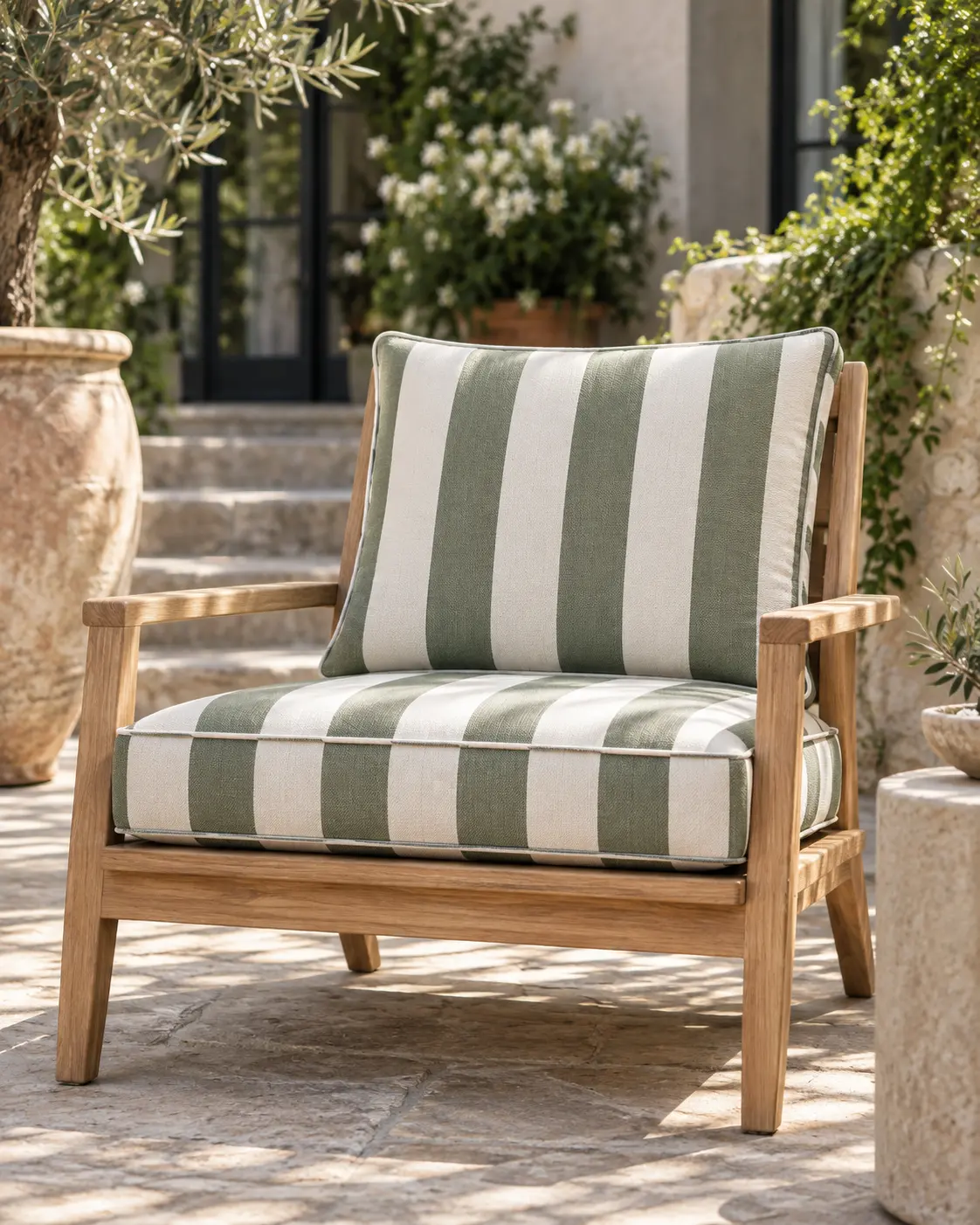
Position: Below the introduction
Caption: Quick-dry construction begins with the actual exposure and operating routine of the seating area.
AI prompt: Ultra-realistic high-end resort poolside editorial photography: tailored outdoor lounge cushions on breathable furniture frames, bright but natural daylight, subtle humid tropical atmosphere, no people, authentic fabric texture, premium B2B hospitality visual, no text or logos.
Position: After “Design seams, closures and underside for drainage”
Caption: Cover construction, zipper placement and the internal core are reviewed together during development.
AI prompt: Photorealistic B2B product-detail image of an outdoor cushion cutaway: textured cover, neat zipper edge, visible breathable internal filling and ventilated underside, clean neutral studio setting, realistic materials, no schematic text or logos.

Position: After “Inspect bulk production and shipment against the sample”
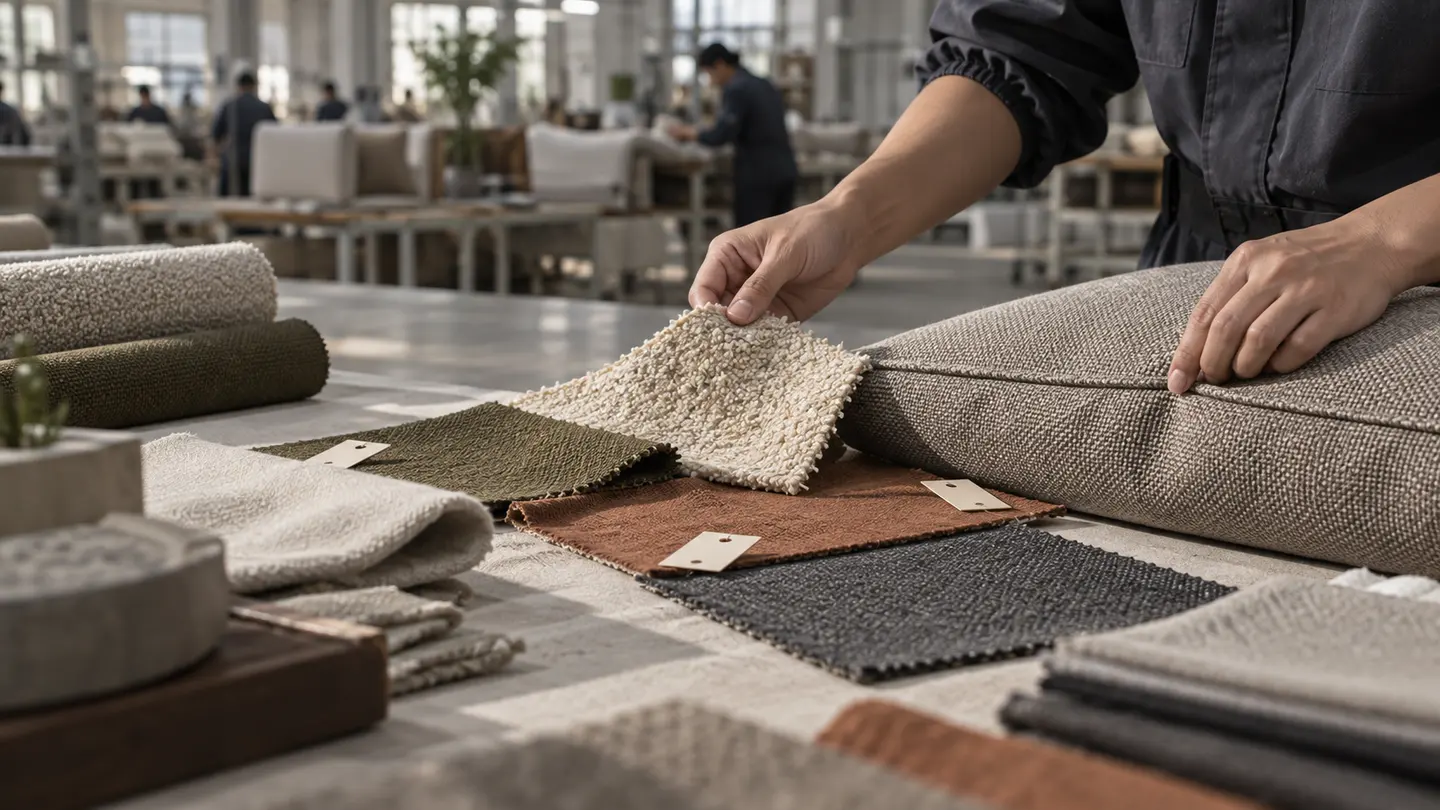
Caption: A technician verifies cover, closure and finished profile before export packing.
AI prompt: Documentary photorealistic Shenzhen cushion factory image: Asian quality inspector examining a finished outdoor seat cushion, checking zipper placement and profile against a sample card, bright clean workstation, authentic textile detail, no readable text or logos.
Frequently asked questions
What filling is used in quick-dry outdoor cushions?
The appropriate filling depends on the intended comfort, exposure and construction. Ask the supplier to describe the complete core, cover and drainage system rather than relying on a generic “quick-dry” material label.
How long do quick-dry cushions take to dry?
Drying time depends on weather, humidity, sun, airflow, rain volume, fill, cover, cushion thickness and how the cushion is positioned. Avoid fixed claims without a defined test method and conditions.
Do quick-dry cushions need drainage holes?
Not every cushion needs the same feature. Review where water enters and exits in the specific cover, filling, underside and furniture configuration. Choose drainage or ventilation features only where they support the intended system.
Can quick-dry cushions remain outside all year?
That depends on local weather, material guidance and operational practice. A storage or protection plan may still be appropriate during severe weather or seasonal closure.
How should a resort inspect quick-dry cushions before shipment?
Use the approved sample and written checklist to verify cover and filling codes, seam and zipper placement, dimensions, underside, labels, care notes, SKU mix and packing.
Enquiry popup plan
Trigger: Show after 40% scroll, after 30 seconds on page, or on desktop exit intent; suppress after a completed submission.
Popup title: Plan a quick-dry outdoor cushion
Copy: Share the location, furniture and expected weather exposure. We will send the core construction questions to resolve before sampling.
Fields: Required: Name, Email. Optional: Company, Project Type, Message. Do not request a phone number.
Button: Request Quick-Dry Review
Develop outdoor cushions for real service conditions
Email info@cushionnook.com with your resort, terrace or retail brief, or use the enquiry form to discuss a sample-ready quick-dry construction.
Send Your Requirements →