Last updated: September 17, 2026 · 10–12 minute read
Outdoor Cushion Care Guide for Hotels, Resorts and Retail Buyers
Outdoor cushion care should reflect the exact cover, filling, exposure and operating routine. A useful guide helps teams keep cushions presentable and dry without generic claims that conflict with the material supplier’s instructions.
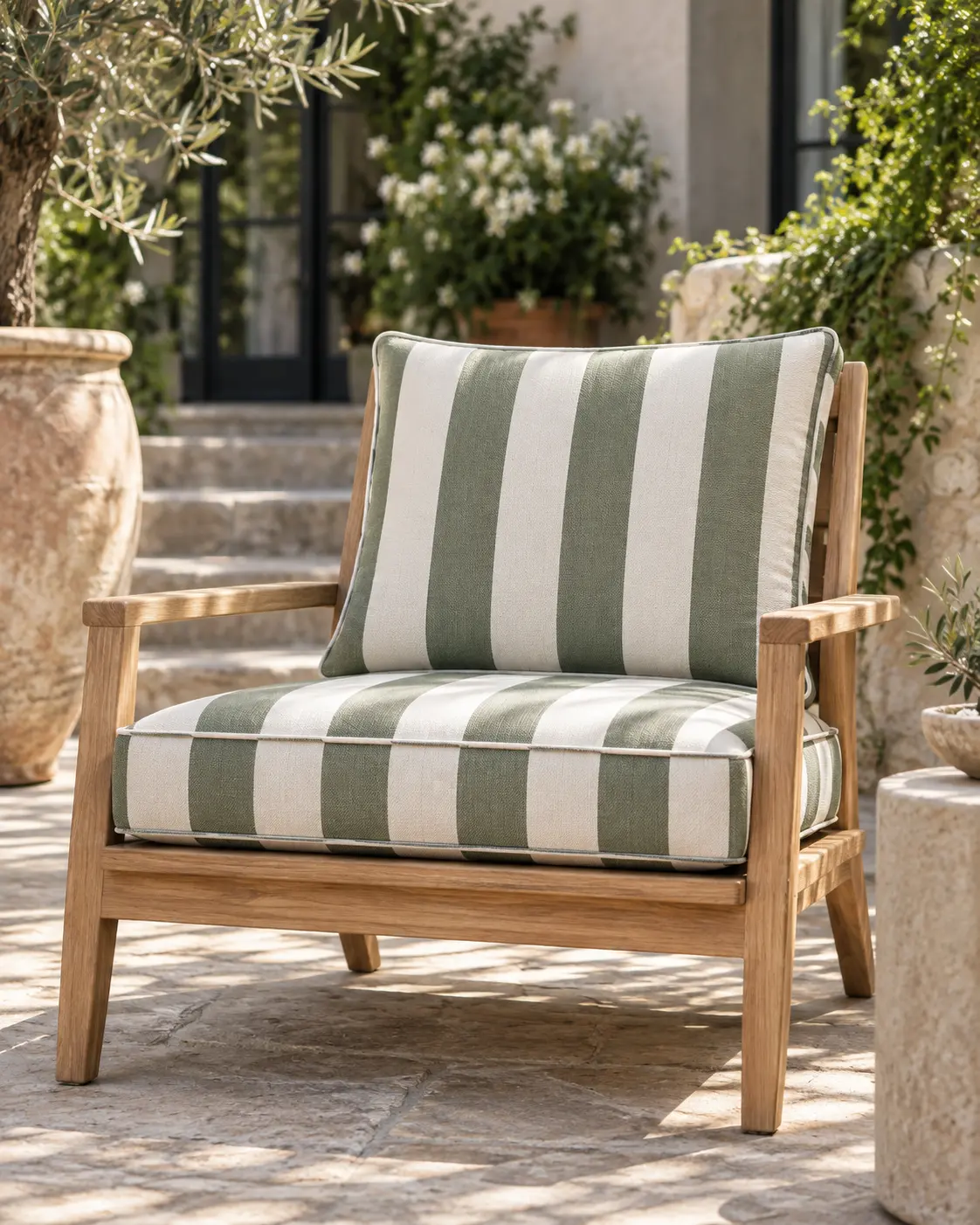
Outdoor cushion care begins with the real setting, material and staff routine.
Quick answer: how should outdoor cushions be cared for?
Follow the selected material supplier’s care guidance, remove debris regularly, address spills promptly with compatible methods, allow cushions to dry with good air circulation, avoid prolonged wet stacking and use an appropriate storage routine during severe weather or seasonal closure. The final care note must match the actual cover, filling and construction.
For B2B buyers, care begins during product development. A cushion that cannot be removed, identified, dried or stored in the way a property operates will be difficult to maintain, regardless of how attractive the material looked at approval.
1. Build care around the selected product
Outdoor upholstery materials vary in construction, finish and cleaning limits. A care method appropriate for one fabric may be unsuitable for another. Start with the exact supplier code and current care guidance, then adapt it to the site: poolside, covered terrace, restaurant patio, balcony or retail customer use.
The cover is only part of the system. Seams, zipper, filling, underside and furniture deck influence drying and cleaning access. Review the completed sample to decide what the operator can do safely. Our outdoor fabric comparison and quick-dry guide explain the construction choices behind the routine.
2. Create a daily and weekly routine
Hotels and resorts need a routine short enough to be followed. Daily tasks may include brushing away leaves, sand or dust; checking spills; straightening cushions; and ensuring water is not trapped below seating. Weekly tasks can include closer visual inspection, material-approved spot treatment and review of zippers, ties or section labels.
Write the routine in operational language and identify who performs it. If cushions are moved after rain, state where they go and how they return. If a property uses a cleaning agent, confirm compatibility with the selected cover before it becomes standard practice. Do not rely on generic “wipe clean” wording.
Care-plan fields
- Exact fabric code and approved care source.
- Normal debris removal and spill-response steps.
- Permitted and prohibited cleaning methods or agents.
- Drying position, airflow and weather-response routine.
- Storage method, section identification and replacement process.
3. Respond to spills and marks early
Prompt attention usually gives a better chance of managing a spill than delayed, aggressive cleaning. Remove loose contamination and follow the approved material guidance; avoid spreading a mark deeper into the cover or filling. Test unusual treatments on an inconspicuous area only when consistent with the supplier guidance.
For food, sunscreen, pool chemicals or salt exposure, the correct response depends on the selected cover. Avoid universal cleaning recipes that can harm a finish, coating or colour. A property can keep a small approved care kit and training note, but it should stay tied to the final product file.
4. Manage wet weather and drying responsibly
After rain or heavy splash, do not stack wet cushions or leave them pressed against a non-ventilated deck. Arrange them so air can circulate according to the product’s approved construction and site routine. If staff collect cushions, label sections and storage positions so they return to the correct furniture. If cushions remain outside, inspect seams, closures and underside for retained moisture.
Drying speed is affected by weather, humidity, sun, airflow, cover, filling, thickness and furniture deck. Do not promise a fixed dry-out time unless it is defined for the specific finished product and conditions. Use practical expectations: assess, air-dry, reposition and store when the operating plan requires it. See our water-resistance guide for precise moisture language.
5. Store cushions for severe weather and off-season
Storage protects both appearance and construction when prolonged exposure is not required. Make sure cushions are clean and dry before storage. Use a clean, dry, ventilated area; keep items off damp floors; and avoid excessive long-term compression outside the approved packing approach. Identify cushions by SKU or section so they return to the correct furniture.
For a seasonal property, make storage part of the operating calendar. Record cushions needing repair or replacement before reopening. A controlled inventory of covers, inserts and sectional pieces helps maintenance teams preserve a consistent guest experience.
6. Inspect covers, filling and attachments regularly
Care is also preventative inspection. Look for open seams, damaged zippers, loose ties, worn piping, fading, water retention, fill migration or surface damage. Address a small defect before it becomes a full replacement issue. For removable covers, use the approved removal and re-fitting method; do not force closures or over-stretch fabric.
Keep a simple issue record by SKU. It can show whether a problem is related to location, cleaning approach, material choice or a specific construction detail. That information is valuable for replacement orders and next-generation product development.
7. Connect care information to reorders and replacements
Retain the approved fabric code, fill build, section map, care note and packing record. When a cover or cushion is replaced, the operator should know which material and orientation to request. For bespoke colours, discuss residual fabric or replacement-cover planning with the original order, not after the material is discontinued.
During factory testing and final inspection, check that care labels and instructions correspond to selected materials. Generic care language can undermine a good product specification. The handover file should contain the approved care guidance and project contact information for future requests.
PROJECT SUPPORT
Need a care-guide brief for your outdoor cushion project?
Send your selected material, exposure conditions and operating routine. We will help organise the cleaning, drying, storage and replacement information to confirm.
Prepare a Care-Guide Brief →Common outdoor-care mistakes
- Using one cleaning method for different cover materials.
- Leaving wet cushions stacked or pressed against an unventilated deck.
- Storing cushions before they are dry.
- Publishing fixed drying-time claims without product-specific conditions.
- Failing to identify sectional pieces and replacement SKUs.
- Using care instructions that do not match material guidance.
Turn care instructions into a service routine
A care card is useful, but a property needs a routine that works when the team is busy. For multi-piece terrace, poolside or restaurant programs, give every cushion family a simple reference: the SKU or fabric code, cover-removal method where applicable, approved cleaning approach, drying position and storage location. A photo of the finished set, attached to the maintenance record, helps a new team member put pieces back in the correct place after cleaning.
We recommend that operators separate a quick daily reset from a scheduled condition review. The daily reset can cover brushing off debris, checking for spills, opening or repositioning damp pieces and confirming that cushions are not trapped under covers or furniture. The scheduled review can cover seams, zippers, tie points, foam recovery, staining and fading in the most exposed zones. This is more practical than waiting for a seasonal deep clean, because small issues are identified while replacement parts are still easy to match.
Keep a service log that supports consistent replacement
For a hospitality buyer, a short log is also a purchasing tool. Record the installation date, location, quantity, fabric or finish code, cleaning issue and action taken. If an operator reports repeated staining at a particular bar seat or a torn tie at a windy location, the next order can address the actual operating condition rather than guessing from a general complaint. The log also distinguishes normal wear from a packaging, installation or construction issue that should be reviewed with the supplier.
During shipment inspection and receiving, retain an approved cover swatch, trim sample and labeled product photograph with the purchase records. When a replacement request arrives months later, those references make it easier to verify the intended construction before remaking one cushion or a full sectional set. They also reduce the risk of mixing similar-looking pieces made for different dimensions or fill specifications.
Plan spare covers and seasonal storage before launch
Where presentation matters every day, consider a controlled spare-cover quantity for the highest-use sizes. The right quantity depends on the venue, cleaning capacity, budget and whether covers can be changed on site; it should be agreed as part of the customer requirements, not presented as a universal rule. Spare covers need the same labeling discipline as the installed pieces, including orientation or location identifiers for shaped benches and sectional furniture.
Before an off-season shutdown or extended closure, test the storage process with a small group of cushions. Confirm that items are cleaned and fully dry, not compressed in a way that permanently distorts fill, and kept away from standing moisture or uncontrolled heat. A short reopening inspection—cover appearance, insert recovery, odor, hardware and labels—gives the operations team a clear handover back to service. Good care is therefore not merely an after-sale message; it is an extension of product application planning and a source of better specification decisions on the next project.
Train the team with simple, product-specific references
Care instructions are most effective when they are usable at the point of work. Create a one-page reference for each cushion family with a finished product photograph, SKU or location code, material identification, routine cleaning direction, wet-weather steps, storage instruction and escalation contact. Keep it with the operating team rather than only in the purchasing file. Where there are multiple similar colors or sectional pieces, a labeled visual guide helps staff return each item to the correct furniture position after cleaning.
Training should distinguish routine care from an exception. Routine actions may include removing loose debris, treating a fresh spill according to the approved material guidance, separating wet pieces and checking cover fit. An exception may include persistent odor, visible mold, a broken zipper, damaged seam, heavily stained cover or a cushion that no longer recovers as expected. The team should know when to stop using a piece, photograph the issue, identify the SKU and ask for a replacement or technical review. This protects the guest experience without encouraging unapproved cleaning treatments that can create a larger problem.
Use seasonal reviews to improve the next order
At the end of a busy season or major event period, review the program with operations and purchasing. Look at which locations had the highest cleaning burden, whether covers were easy to refit, whether storage space was adequate, which parts needed repair and which color or construction choices created the most visible wear. Record the observations by SKU and use them as evidence for any future modification. A shaded lounge area may need a different balance of appearance and serviceability than a sunny terrace, even within the same property.
For replacement planning, retain final dimensions, material code, fill or insert reference, cover details and approved product photographs. If the original fabric is unavailable, compare a proposed replacement honestly rather than assuming it will behave or appear exactly the same. This information lets the buyer decide whether to replace a single part, refresh a complete zone or adapt a new phase of the project. It is also useful at shipment inspection: the factory can confirm that the correct labels, care information and location identifiers travel with the goods.
Keep care claims aligned with the real conditions
Care content should explain practical limits. Outdoor cushions can be designed for their stated application, but prolonged moisture, poor ventilation, unsuitable cleaning agents and storage while damp can affect any textile-and-fill system. Avoid universal claims such as “maintenance free” or a fixed drying time unless they are supported for the exact configuration and conditions. Instead, describe what the customer can do: inspect, clean according to material guidance, promote drying, store appropriately and contact the supplier with the product reference if a problem occurs.
This transparent approach supports both B2B service and trustworthy search content. It gives users a clear answer to common care questions while keeping the advice tied to product application, factory-approved instructions and observable site conditions. Maintenance becomes a repeatable process that protects the investment and feeds useful data back into product development.
Make replacement decisions from product evidence
When a cover or insert needs replacing, begin with the SKU, location, approved material code and final product photograph. Confirm whether the customer needs the identical component, a revised construction or a full zone refresh. This prevents a well-intended replacement from creating a visible mismatch or fit problem, especially on sectional outdoor furniture where each piece has a specific orientation.
Conclusion: make care part of product performance
Outdoor cushions last and present better when care is planned around their actual construction and operating environment. Name the material, give staff a practical routine, manage wet weather and storage, inspect regularly and keep reorder references. This turns maintenance into a controlled part of the customer experience.
Photography plan for this guide
Use original factory photography where possible. The prompts below are production references for realistic imagery, not claims about a specific order.
Position: Below the introduction
Caption: Outdoor cushion care begins with the real setting, material and staff routine.
AI prompt: Photorealistic high-end hotel terrace with well-maintained tailored outdoor cushions, soft morning daylight, believable textured fabric and clean landscaping, no people, premium hospitality editorial, no logos or text.
Position: After “Respond to spills and marks early”
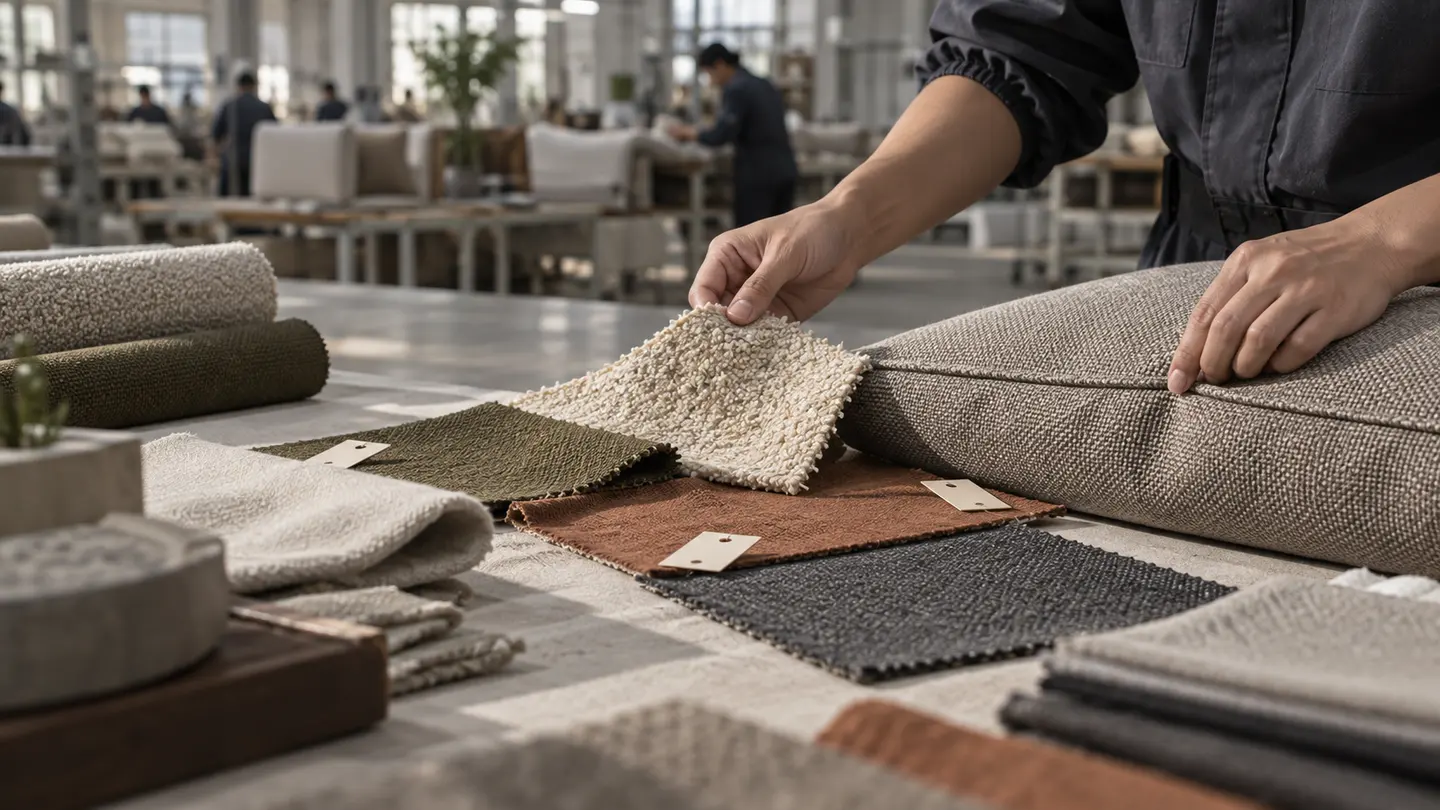
Caption: Cleaning methods should follow the selected cover material and product approval record.
AI prompt: Realistic product-detail photography: outdoor cushion fabric and piping beside a soft brush, clean cloth and unbranded care card, natural daylight on neutral table, authentic textile texture, no readable text or logos.

Position: After “Store cushions for severe weather and off-season”
Caption: Clean, dry cushions are identified and stored for efficient seasonal return to service.
AI prompt: Photorealistic orderly hospitality storage room: clean dry outdoor cushions stacked carefully on shelves with subtle non-readable section tags, Asian staff organising cushions, bright ventilated space, no logos or text.
Frequently asked questions
Can outdoor cushions stay outside in rain?
That depends on the finished cushion construction, site exposure and operating routine. Follow the approved material and care guidance; inspect and dry cushions appropriately after wet weather rather than relying on a broad claim.
How should hotels dry wet outdoor cushions?
Use the product-specific routine: separate cushions, allow air circulation, position them as approved and avoid wet stacking. Drying depends on weather, fill, cover, thickness and furniture deck.
Can outdoor cushion covers be machine washed?
Only if the selected fabric and cover construction guidance permits it. Confirm the exact material supplier instruction; a removable cover is not automatically machine washable.
How do I store outdoor cushions for winter?
Clean and dry them first, store in a dry ventilated area off damp floors, avoid excessive long-term compression and label sections or SKUs for return to the correct furniture.
What should an outdoor cushion care label say?
Use concise instructions matched to the approved cover and filling, including routine cleaning, spill response, drying and storage guidance. Avoid generic claims that conflict with material guidance.
Enquiry popup plan
Trigger: Show after 40% scroll, after 30 seconds on page, or on desktop exit intent; suppress after a completed submission.
Popup title: Request an outdoor cushion care brief
Copy: Share your material and site conditions. We will send the care and storage points to define before delivery.
Fields: Required: Name, Email. Optional: Company, Project Type, Message. Do not request a phone number.
Button: Request Care Brief
Hand over outdoor cushions with practical care information
Email info@cushionnook.com or use the enquiry form to discuss material-specific care and replacement planning.
Send Your Requirements →