Last updated: September 17, 2026 · 10–12 minute read
Waterproof vs. Water-Resistant Outdoor Cushions: What Is the Difference?
“Waterproof” and “water-resistant” are often used too loosely in outdoor cushion sourcing. For B2B buyers, the important question is not the label alone but how the complete cushion handles rain, splash, humidity and drying in its intended environment.
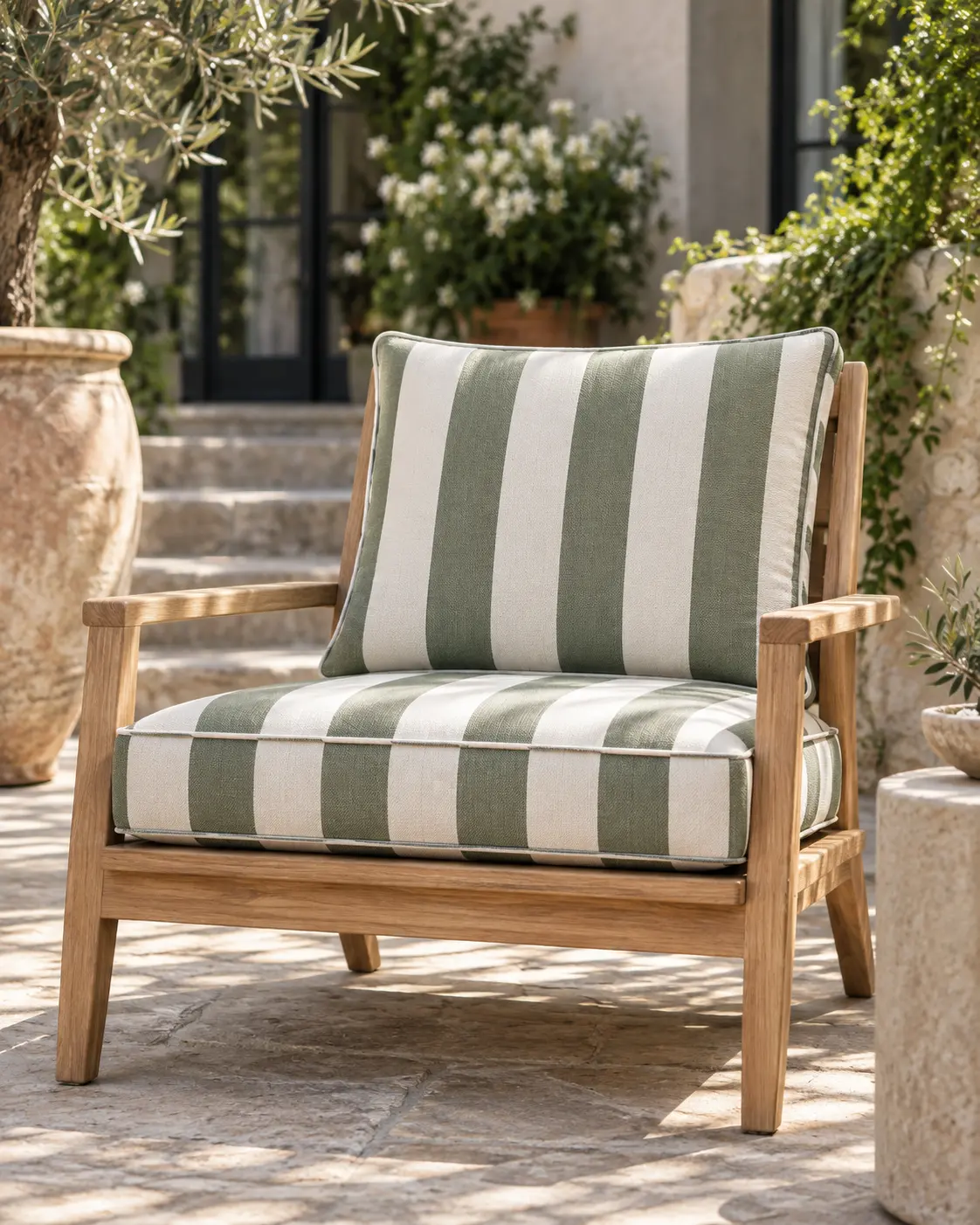
Weather exposure, cover construction and operations should be planned together for outdoor seating.
Quick answer: waterproof vs. water-resistant outdoor cushions
A water-resistant outdoor cushion usually has a cover designed to resist or shed some water for a limited period. A waterproof claim suggests a stronger barrier, but it still needs precise definition: does it apply to the face fabric only, the whole cover, a liner, or the completed cushion? Seams, zippers, cut edges, filling and underside construction can all provide paths for moisture.
For most hospitality and furniture projects, it is more useful to specify a moisture-management system than to ask for a blanket waterproof claim. Define exposure, cover construction, filling, drainage, drying expectation, storage and care. Then approve the assembled sample under conditions relevant to the site.
1. Why terminology alone creates procurement risk
Marketing descriptions can simplify a complex product. A buyer may hear “waterproof outdoor cushion” and assume it can remain in heavy rain without water reaching the core, without drying delay and without maintenance. That assumption may not match the fabric supplier’s intended claim or the finished cushion construction. A fabric can resist water on its face while an unprotected zipper, seam or underside still allows water into the fill.
Request a scope statement in the quotation and sample record. It should explain what component has the claimed property, what exposure it is intended to handle, what limitations apply and what care is expected. Avoid phrases such as “100% waterproof” unless the supplier has product-specific evidence and the scope is clearly defined. Exact language protects both the buyer and the end user.
Questions to ask before approving a water-related claim
- Does the claim apply to the fabric face, the cover, a liner or the finished cushion?
- How are seams, piping, zipper openings, buttons and attachment points constructed?
- What fill is used, and how does moisture leave it after wet weather?
- Is the cushion intended for covered outdoor use, occasional rain or continuous exposure?
- What cleaning, drying and storage instruction supports the claim?
2. The cover fabric is only the first layer
Many outdoor fabrics use a construction or finish that helps the face shed water. That may be appropriate for a covered terrace or a cushion brought inside after rain. It does not by itself define the behavior of the finished article. Cover weight, weave, backing, coating, finish condition and care can all affect water interaction. Request the actual fabric supplier, code and technical guidance; “outdoor polyester” or “waterproof fabric” is not enough specification.
Water-repellent finishes may need appropriate care and can be affected by soiling, abrasion or cleaning. Do not assume that a surface treatment is permanent. The buyer should align material selection with the operator’s ability to maintain the product. For a detailed material comparison, see our acrylic, olefin and polyester guide.
3. Seams and closures determine whether water reaches the interior
A cushion cover is made from cut panels. Every seam, piping join, zipper end and attachment point is a construction decision. A sewn seam is not automatically a sealed seam. A zipper offers practical removal access, but it can also become a water-entry route if positioned where water pools or if there is no protective construction. Piping and decorative buttons add character but introduce additional joins that need to match the intended exposure.
Review these details on the sample. Put the cushion in its normal orientation and look for low points where rain might collect. Check how the zipper sits when the cushion is compressed under use. For a project exposed to frequent rain, discuss whether a protective zipper flap, suitable placement, different closure strategy, liner or drainage design is needed. The correct solution is tied to the site, not a universal style rule.
4. Filling and drainage control the practical drying result
Even a well-selected cover can leave a cushion uncomfortable or unusable if water remains in the filling. Foam, fibre, down-alternative, batting and other fills respond differently to moisture and compression. The core construction, underside, venting and drainage path influence how readily a cushion can release water and air dry. This is why a water-shedding cover should not be confused with a quick-dry cushion.
For exposed seating, ask the factory to describe the complete moisture path: where water enters under realistic use, where it can leave, how the cushion should be positioned while drying, and whether staff must remove or store it during severe weather. A clear answer is more useful than a broad claim because it allows the hospitality operator to plan service. Read our quick-dry construction guide for the component decisions.
5. Match construction to the exposure level
Covered outdoor seating may only require a cover that tolerates occasional splash and a practical care routine. Open terraces, pool decks and marine-adjacent locations need a more deliberate approach to cover, closure, fill, drainage, UV exposure and storage. In some cases, the better solution is not a more aggressive claim; it is an operational plan that moves cushions during heavy weather and uses fitted protective covers when seating is not in service.
Classify the project internally as covered, partially exposed or fully exposed. Add the weather response expected from staff. A buyer who expects daily collection has different design freedom from one who expects cushions to remain outdoors around the clock. This simple distinction should appear in the sample brief and quotation, not only in a sales conversation.
Example specification language
- “Water-resistant cover fabric selected for covered terrace seating; cushions to be brought under cover during sustained rain.”
- “Outdoor cushion system to include stated fill and drainage approach; buyer to approve sample and care guidance for poolside exposure.”
- “No waterproof claim is made for seams, zipper or completed cushion unless separately documented for the specified construction.”
6. Test the relevant sample, then document limitations
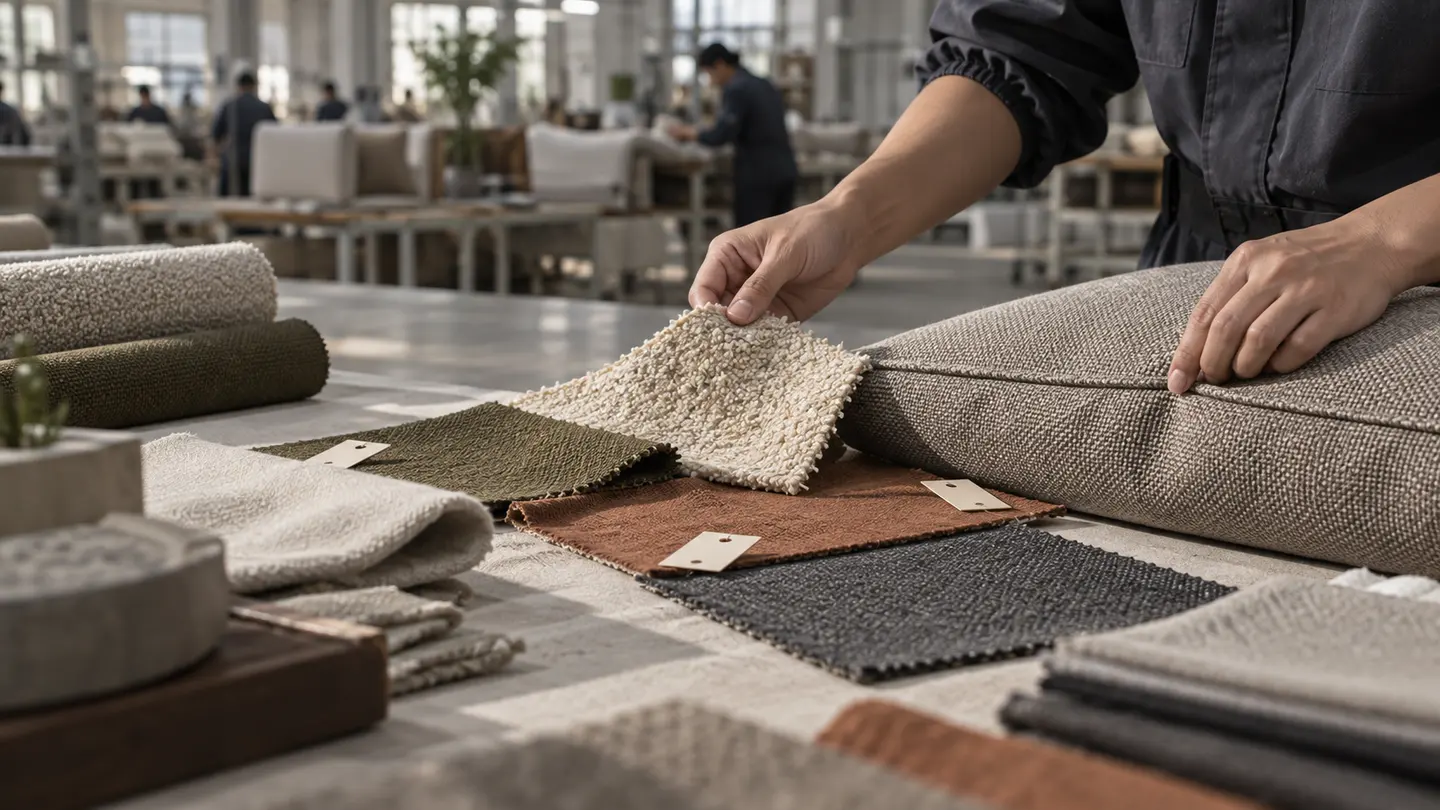
Sample review is where water-related language becomes practical. Inspect the selected cover, seams, zipper, piping, underside and filling as a completed cushion. If a project needs a particular test or documented performance level, agree the method, laboratory, specimen and pass criteria before bulk material is committed. A general fabric test may not prove the final cushion construction.
During factory testing and quality control, confirm incoming fabric codes and any approved liner or fill. Check that zipper placement, seam construction and underside match the golden sample. At shipment inspection, verify SKU labels, care notes, packing and carton protection against the approved specification. These controls prevent a construction change from silently changing the product’s practical weather performance.
PROJECT SUPPORT
Need to define a realistic outdoor weather specification?
Send your seating location, expected exposure and operating routine. We will help identify the cover, filling, drainage and care questions for a sample-ready brief.
Review Weather Exposure →7. Care and storage are part of the specification
Every outdoor cushion needs an operating routine. It may include brushing debris away, prompt attention to spills, allowing air circulation after wet weather, avoiding prolonged wet stacking and storing cushions during severe weather or seasonal closure. The instructions should be based on the final fabric supplier’s guidance and the fill construction, not copied from another collection.
For a hotel or resort, identify who removes cushions, where they dry and how sectional pieces are returned to their correct location. Include SKU or orientation markers where needed. A care guide supports the material system and makes performance expectations visible to the team responsible after delivery. Our outdoor care guide gives a framework for that handover.
Convert weather exposure into a project-level risk plan
Buyers should classify locations by the consequence of moisture, not only by rainfall. If a poolside cushion remains damp for an hour, can staff rotate it, is there backup seating, and does the customer expect immediate use? If a covered restaurant cushion receives occasional splash, can it be dried between services? The answer determines whether the project needs a more advanced construction, a different operating routine or simply more precise care information.
Make a risk plan for each seating zone: expected water source, entry pathways, likely moisture retention point, staff response, drying position and replacement fallback. Use it when reviewing the sample. This approach prevents a buyer from trying to solve an operations issue only by demanding a stronger fabric claim.
Write purchase-order language that can be checked
Good specification language names the selected cover, filling, seam and closure arrangement, then describes the intended exposure and care. It does not promise impossible universal performance. For example, a buyer can require a stated cover code, underside construction, zipper placement and approved care note for poolside use. The factory can then check those physical details during first-off and shipment inspection.
Include a limitation statement where appropriate: the cushion is intended for a defined exposure and requires the agreed drying or storage response. This is more transparent than a broad “waterproof” label and helps the hotel or retailer communicate honestly with its own staff and customers.
Validate handover after delivery
At project handover, give operations staff the actual care and weather-response instructions. Demonstrate how sections are identified, how covers are accessed if removable and where cushions should be placed after rain. Record any early feedback about pooling, drying or customer use. This first-hand operational evidence helps refine a reorder and is especially valuable for a resort moving from prototype samples to a full property rollout.
Keep the approved sample, construction photos and final instruction with the product file. If a later order changes fabric, filling or zipper treatment, repeat the scope review instead of assuming the prior water-related wording still applies.
Turn a moisture claim into a complete project requirement
When a buyer writes “waterproof” in a quote request, the word can conceal several different expectations: rain shedding during a short shower, resistance to a spill, a cover that can be wiped down, an insert that will not stay saturated, or a cushion that can return to use after wet weather. Clarify the scenario in plain language. State whether the seat will be exposed, whether water can drain from the furniture, how quickly staff can move cushions, whether covers are removable and what condition is acceptable before a piece returns to service.
This discussion should include the whole assembly. A resistant outer fabric can be undermined by seam construction, zipper position, an enclosed furniture base or a fill that holds moisture. Conversely, a very protective cover may slow drying if moisture enters through another path. Rather than asking for an absolute label, ask the supplier to explain the proposed moisture-management system, the boundaries of the intended use and the care actions that remain necessary.
Write observable acceptance points for the sample
For a project sample, agree what the buyer will inspect and how. The review can include cover fit, seam and zipper placement, how water is directed away from vulnerable areas, ease of removing a cover if applicable, fill recovery after normal handling and the practical drying or storage routine. Use the actual furniture where possible, because a cushion’s underside and airflow can change substantially when it sits in a deep, enclosed frame. Record the observations, conditions and any limitations instead of turning a single demonstration into a universal performance claim.
Operations staff should be included where the product will be used commercially. Ask who responds after rain, where wet pieces are placed, whether there is a ventilated drying area and how covers are stored. A construction that fits a resort with dedicated staff may be inappropriate for an unattended residential project, even if both are outdoors. The best specification is therefore connected to the site’s labor, storage and maintenance reality.
Control the detail through production and handover
After approval, capture the moisture-related decisions in the production file: material and backing codes, seam and zipper orientation, insert or foam specification, labels, packing and care instructions. At factory testing or first-off review, verify the features the sample established. At shipment inspection, confirm that pieces are identified, covers are correctly fitted and the care information matches the final product configuration. If a material or construction change is proposed because of availability, review its effect before accepting it.
At installation preparation, give the receiving team a short handover: identify the cushions by SKU or location, show any orientation points, explain post-rain handling and provide the approved care contact. This is not a guarantee that no moisture-related issue can occur; it is a controlled, credible way to help the customer operate the product within its designed application. Clear requirements and honest limits are more valuable to a B2B buyer than a broad waterproof promise.
Conclusion: specify moisture management, not just a label
The practical distinction between waterproof and water-resistant depends on scope. A finished cushion behaves according to its cover, seams, closure, filling, drainage and care—not one label on one material. B2B buyers get better results by defining exposure, using precise wording, approving a complete sample and recording the maintenance routine alongside the product specification.
Photography plan for this guide
Use original factory photography where possible. The prompts below are production references for realistic imagery, not claims about a specific order.
Position: Below the introduction
Caption: Weather exposure, cover construction and operations should be planned together for outdoor seating.
AI prompt: Photorealistic resort terrace after light rain: tailored outdoor lounge cushions under a partially covered pergola, realistic small water droplets and wet stone floor, sophisticated hospitality setting, no people, natural overcast light, premium editorial photography, no logos or text.
Position: After “Seams and closures determine whether water reaches the interior”
Caption: A zipper and seam detail must be evaluated as part of the finished cover, not separately from it.
AI prompt: High-resolution realistic product-detail photo of an outdoor cushion: textured woven cover, neat piping seam and a subtle protective zipper flap, a few natural water droplets, neutral studio lighting, authentic textile construction, no brand, no text.

Position: After “Test the relevant sample, then document limitations”
Caption: A technician checks the finished sample against the approved cover and construction references.
AI prompt: Documentary realistic Shenzhen factory photo: Asian quality technician inspecting a finished outdoor cushion beside its matching fabric swatch and construction reference, clean worktable, authentic seams and fill profile, natural industrial lighting, no logos, no readable text.
Frequently asked questions
Are outdoor cushions waterproof?
Some components may be described as waterproof, but a finished cushion should not be assumed waterproof without a clear product-specific scope. Seams, zippers, filling and underside construction may allow moisture into the cushion.
What is the difference between water-resistant and water-repellent?
Both terms can be used differently by suppliers. Ask for the exact fabric construction, intended exposure, supporting technical guidance and whether the statement applies to the face fabric, cover or whole cushion.
Can a water-resistant outdoor cushion stay outside in rain?
That depends on the complete construction and site conditions. A cover that sheds occasional water may still allow moisture into the filling through seams or closures. Define the weather response and care routine for the project.
Do waterproof covers make cushions quick-drying?
No. Quick drying depends on how the complete cushion handles moisture, including filling, venting, drainage, orientation and air circulation. A barrier cover can even trap water if the system is not designed carefully.
What should be shown on an outdoor cushion care label?
Use instructions that match the selected fabric and filling: routine cleaning, drying after wet weather, storage guidance and any relevant limitations. Avoid generic claims that contradict the supplier’s material guidance.
Enquiry popup plan
Trigger: Show after 40% scroll, after 30 seconds on page, or on desktop exit intent; suppress after a completed submission.
Popup title: Plan an outdoor cushion system
Copy: Share your exposure level and seating application. We will send a concise checklist for cover, seams, filling, drainage and care.
Fields: Required: Name, Email. Optional: Company, Project Type, Message. Do not request a phone number.
Button: Request Exposure Review
Specify outdoor cushions with precise performance language
Email info@cushionnook.com with your project details or use the enquiry form to begin a construction and sampling discussion.
Get a Quote →