Last updated: September 17, 2026 · 10–12 minute read
How to Choose Custom Seat Cushion Materials for Hospitality Projects
Hospitality seat cushions must work after opening day, not only during design presentation. This B2B guide helps designers and procurement teams specify cover materials, foam, construction and replacement strategy around the actual furniture, cleaning routine and guest use.
Tailored seat cushions are reviewed in a hospitality setting before the specification is released.
Quick answer: how should hospitality teams choose custom seat cushion materials?
Choose materials as one assembled seating system: the cover fabric, foam or filling, finished thickness, seams, closure, attachment and supporting frame must suit the location, traffic, cleaning method and replacement plan. A fabric that looks appropriate on a swatch can behave differently when pulled over thick foam; a foam build that feels comfortable on webbing can feel too firm on a solid deck.
For hotel, restaurant and commercial projects, start with the actual seat location and operating routine. Then request a physical sample that uses the proposed cover and fill on a comparable support. The final specification should name materials by code, state key measurement points and document inspection criteria before bulk production begins.
1. Define the seating application before selecting a fabric
“Hospitality” is not one condition. A lobby lounge, breakfast banquette, guestroom window seat, dining booth, spa treatment bench and poolside daybed experience different contact, spill, sunlight and cleaning patterns. Use a location-by-location brief to identify traffic, exposure, food or beverage risk, cleaning chemicals, ventilation, storage and expected replacement cycle.
Ask the operator which cleaning actions are realistic. A removable cover is only useful if staff can remove, launder or replace it without disrupting service. A wipeable surface may be useful at a restaurant booth, but its hand feel and seam construction must still suit the design. A lounge cushion can prioritise texture and tailored detail if it will be vacuumed or professionally cleaned under a defined schedule.
Questions to answer for each cushion location
- Who uses the seat, how often, and for how long?
- Is the cushion indoors, under cover, exposed to UV, or subject to rain and humidity?
- What does it sit on: a solid board, slats, webbing, sprung frame or built-in bench?
- What cleaning method, cleaning agent and downtime can the operator accommodate?
- Must covers be removable, and does the project need replacement covers or spare cushions?
These answers should accompany the drawing when requesting a quotation. They are as important as the visible fabric colour. See our hotel bench cushion specification guide for fitted seating details.
2. Evaluate upholstery fabric beyond colour and texture
Fabric selection should address appearance, cleanability, strength, abrasion resistance, seam behaviour, stretch, pile direction, light exposure and colour continuity. The relevant balance changes by location. A textured woven may give a lounge its character but need careful pattern alignment and cleaning guidance. A coated or high-cleanability surface may be practical for booths yet need suitable seam construction to avoid stress at corners.
Request the exact supplier code and current technical information for the proposed material. Do not rely on a generic category name such as “linen”, “polyester” or “outdoor fabric”. Construction, yarn, finish and backing can vary substantially within the same category. If fabric performance needs to meet a customer or project requirement, agree the applicable test method and pass criteria with the fabric supplier or laboratory rather than transferring a number from an unrelated project. ASTM maintains a catalogue of textile standards that can help teams identify current method references; the correct test depends on the product and use case.
Order a material cutting large enough to see the true texture, colour shift and direction. Place it against the interior finishes and under representative light. For large cushions or long banquettes, consider whether colour variation between rolls or dye lots affects the visual field, and ask how materials will be allocated across the run.
3. Specify foam by its role, not density alone
Foam density is a material property; it is not a complete comfort or durability promise. A seat’s feel and recovery are influenced by density, firmness, thickness, layering, cover tension and the support below it. Two cushions with the same density can feel different if one is thinner, uses a different firmness, or sits on a different deck. Specify the functional result: seat support, edge stability, profile, comfort and expected use—then confirm the foam build with a physical sample.
Seat cushions and back cushions generally have different jobs. A seat must manage repeated loading and may need a more structured profile; a back cushion can favour softer comfort and adjustability. Decorative pillows have another priority: fill distribution, loft and recovery after unpacking. When a project includes several cushion types, do not assume one fill system is right for all of them.
Foam and filling details worth recording
- Foam type, density and firmness where applicable, plus finished thickness and layering.
- Whether a fibre wrap, batting, down-alternative or other comfort layer is included.
- Support deck or frame information and whether a bottom board, non-slip layer or venting is needed.
- Any cut-outs, bevels, radii or channels that change feel and finished profile.
- Recovery expectation after packing and the intended care or rotation instruction.
For a deeper explanation of the relationship between density, firmness and support, read our commercial foam guide.
4. Design cover construction for maintenance and fit
A good cover construction keeps its shape, gives access when required and avoids putting a seam where user contact is highest. Zipper location, gusset construction, piping, quilting, ties, underside material and seam allowance all influence durability and maintainability. A removable cover should be tested for removal and re-fitting on the actual fill; a zip that is hidden beautifully but impossible to access does not solve an operator’s problem.
For long benches, decide whether one continuous cover or several sections are better. Sections can make installation, cleaning and replacement more manageable, but visible joins must be considered in the design. For curved or irregular seating, a template and fitted sample are safer than dimensions alone. Record fabric direction and pattern matching so that the production team does not interpret them independently.
Ask to inspect piping joins, corner turns, zipper ends, strap reinforcement and underside seams during sampling. These small details influence the perception of quality because they sit at the edges where a tailored cushion is examined most closely. Our cover construction guide provides a component-level checklist.
5. Plan for cleaning, replacement and installation from the first sample
Material selection is also an operations decision. A property may benefit from removable covers, but only if spare covers can be identified and reordered by SKU. A restaurant may need a simple wipe-clean protocol, yet still require a construction that does not trap debris at seams. A hotel with built-in seating may need sectional labels and an installation map so maintenance teams can return each piece to the correct position.
Include care information in the approval set. It should match the actual fabric supplier guidance and the operating environment, rather than repeating generic instructions. For outdoor or semi-outdoor seating, give practical guidance on brushing debris away, drying after heavy weather, storing cushions when appropriate and avoiding incompatible cleaners. A useful care label supports product performance but does not replace a suitable material and construction choice.
6. Use the sample to validate the whole system
Approve a finished sample using the actual proposed cover, foam build, trim and closure. Place it on a representative frame. Sit on it, clean a discrete area only in line with the material supplier’s guidance, remove and re-fit the cover if that is part of the design, and check the cushion from normal guest viewing distance. Document the outcome with signed dimensions, material codes and clear photographs.
Factory testing and first-off review should verify that bulk goods match the same reference. Typical checks may include incoming material-code confirmation, cut-piece direction, finished dimension, seam workmanship, zipper function, fill distribution, label placement and packing. The required scope should be agreed in the buyer’s inspection checklist before production, not improvised at shipment.
PROJECT SUPPORT
Need a material recommendation for a seating project?
Send your furniture drawing, project use, cleaning routine and design direction. We will help turn them into a cover, fill and construction discussion that can be sampled.
Request Material Advice →7. Handle compliance and documentation precisely
Commercial furnishing requirements vary by country, product type and intended use. Avoid general claims that a cushion is “compliant” without identifying the applicable scope, construction and supporting evidence. Identify the destination market early and ask the buyer, customer, qualified testing partner or relevant authority what documentation applies to the finished item.
For U.S. projects, the Consumer Product Safety Commission publishes guidance on certain upholstered furniture flammability requirements and the relationship to California TB 117-2013. Whether a specific cushion is in scope depends on the product and construction; use the CPSC’s upholstered furniture FAQ as a starting point, not as a blanket product claim. Our compliance planning guide explains how to organise evidence before bulk materials are committed.
Common material-selection mistakes for hospitality cushions
- Selecting fabric from a small swatch without reviewing it under project lighting or on a full cushion.
- Using foam density alone as a comfort and durability specification.
- Ignoring the support deck underneath the cushion.
- Designing a removable cover without proving zipper access and re-fitting.
- Specifying a long or curved bench from dimensions alone without a template or fitted sample.
- Writing generic care or compliance claims that do not match the actual product and market.
Create a material decision record for every seating zone
Large hospitality projects often fail to distinguish between seating zones. A lobby lounge, restaurant banquette, guestroom window seat and outdoor terrace may use a similar palette but require different material decisions. Build a zone-by-zone record that shows the furniture, traffic, cleaning routine, exposure, cover fabric code, fill build, attachment and replacement strategy. This gives designers visual control while giving procurement and operations a usable handover document.
Review the record with the property operator before bulk release. Ask whether the stated cleaning method is realistic during service, whether spare covers can be stored, and whether sectional items can be installed without specialist knowledge. When a material is selected primarily for appearance, record the operational limitation and the agreed response rather than hiding it behind a generic durability claim.
Balance visual consistency with operational fit
A coordinated interior does not always require the exact same fabric and foam in every location. It may be better to use related colours or textures across different constructions than to force one cover into a high-spill booth, a sunlit window seat and a low-traffic lounge. Ask the factory to develop a material board that identifies the shared visual story and the appropriate performance role for each product.
During sampling, place materials next to neighbouring finishes and review them under the lighting used in service. Check not only the front face but also edge profile, piping, underside and seam appearance. For a long or sectional bench, install adjacent samples together to see whether dye-lot allocation, fabric direction and fill profile create a consistent result.
Plan an evidence-based replacement programme
Replacement is easier when it is designed into the specification. For each seating zone, decide whether the property needs spare cushions, spare removable covers, retained fabric or simply a documented reorder path. Store the SKU, section map, material code, sample photos and fitting notes in the project file. This makes a later replacement a controlled purchase rather than a fresh development project.
Review replacement decisions alongside procurement cost. A small spare cover programme may be more economical than holding fully filled cushions, while a high-traffic booth may benefit from complete replaceable sections. The right approach depends on access, storage, expected wear and whether material continuity can be maintained.
Use post-installation feedback to improve the next order
After opening, ask operations staff about cleaning, fit, recovery, guest comfort and any recurring maintenance issue. Record the feedback by SKU and seating zone. It provides first-hand evidence for future refurbishment or expansion and is more useful than a broad statement that a fabric “performed well.” If a change is needed, test it on one representative sample before applying it across a replacement order.
Match the specification to each hotel service zone
Hotels rarely have one universal cushion condition. A lobby banquette may need a tailored visual finish and steady daily recovery; a breakfast-area seat may face repeated food contact; a poolside lounger has weather exposure and rapid turnover; and a guest-room window bench may prioritize quiet comfort and a neat fit. Divide the project into service zones before selecting a material system. For each zone, record expected use frequency, cleaning method, moisture exposure, sunlight, food or cosmetics risk, ability to remove covers and the cost of taking a seat out of service.
This approach helps buyers avoid both under- and over-specification. A premium-looking upholstery fabric may be appropriate in a controlled lounge but inefficient for a heavily cleaned dining bench. Conversely, a highly technical outdoor cover may add cost and visual compromises where a protected indoor bench is the real application. The discussion should concern the finished cushion—cover, backing, closure, fill, construction and care route—not a single fabric claim in isolation.
Build an acceptance matrix with operations staff
Before sample approval, turn the zone analysis into a short acceptance matrix. Include the SKU, location, dimensions, cover material code, cushion insert or foam construction, closure, attachment, visual reference, cleaning expectation and any customer documentation requirement. Add the questions that matter on site: can housekeeping remove and refit the cover without damaging the zipper? Can a wet cushion be positioned to dry? Are replacement covers distinguishable by label? Will the fill recover appropriately after the actual guest use pattern?
Review a representative sample with the hotel’s design and operations teams together. Designers can confirm proportion, texture and color under the project lighting; operations teams can test lifting, removal, storage and cleaning access. When comments conflict, document the decision and the intended priority. A product that photographs well but is difficult to service can create more cost over a season than a slightly more practical construction chosen at the start.
Plan replacement and refresh from the first order
Hospitality programs benefit from a replacement strategy before the first shipment. Record the final fabric or finish code, approved sample photographs, dimensions, label artwork and packing references. Consider whether high-use zones need spare covers, additional inserts or a small replenishment plan; the appropriate quantity depends on occupancy, cleaning capacity and budget, so it should be agreed rather than assumed. Clearly label shaped or location-specific pieces to prevent a replacement from being installed in the wrong zone.
After installation, capture feedback at a sensible early interval: fit, comfort, seam behavior, cleaning experience, drying, appearance and any wear pattern. This is valuable project evidence, not a claim that every hotel will perform the same way. It allows the buyer and factory to adjust a future phase with genuine operational information. Material selection becomes more reliable when it is connected to actual service, sample validation, production controls and a documented path for maintenance and replenishment.
Conclusion: specify for real service, then prove it in sample
The strongest hospitality seat cushion specification connects the visual design to the realities of guests, operators and furniture. Define the use, name the materials, choose foam by function, design covers for fit and maintenance, and approve the complete assembled system before release. This gives project teams a clearer route to a durable, maintainable and visually consistent seating result.
Photography plan for this guide
Use original factory photography where possible. The prompts below are production references for realistic imagery, not claims about a specific order.
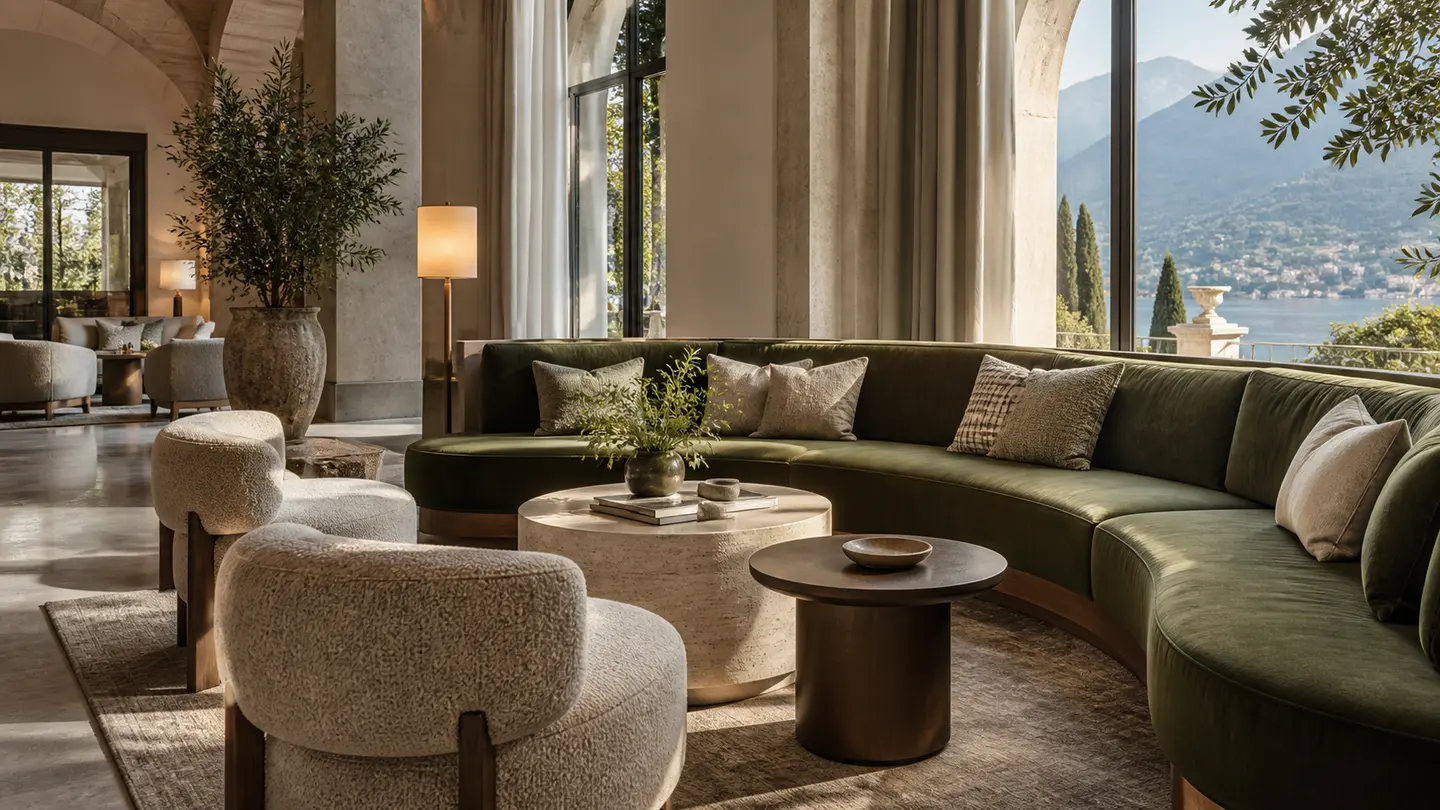
Position: Below the introduction
Caption: Tailored seat cushions are reviewed in a hospitality setting before the specification is released.
AI prompt: Ultra-realistic hospitality interior photography: premium contemporary hotel lounge with tailored neutral custom seat cushions, warm natural daylight, believable fabric texture and subtle piping, no people, high-end European-American interior aesthetic, 16:9, no logos, no text.
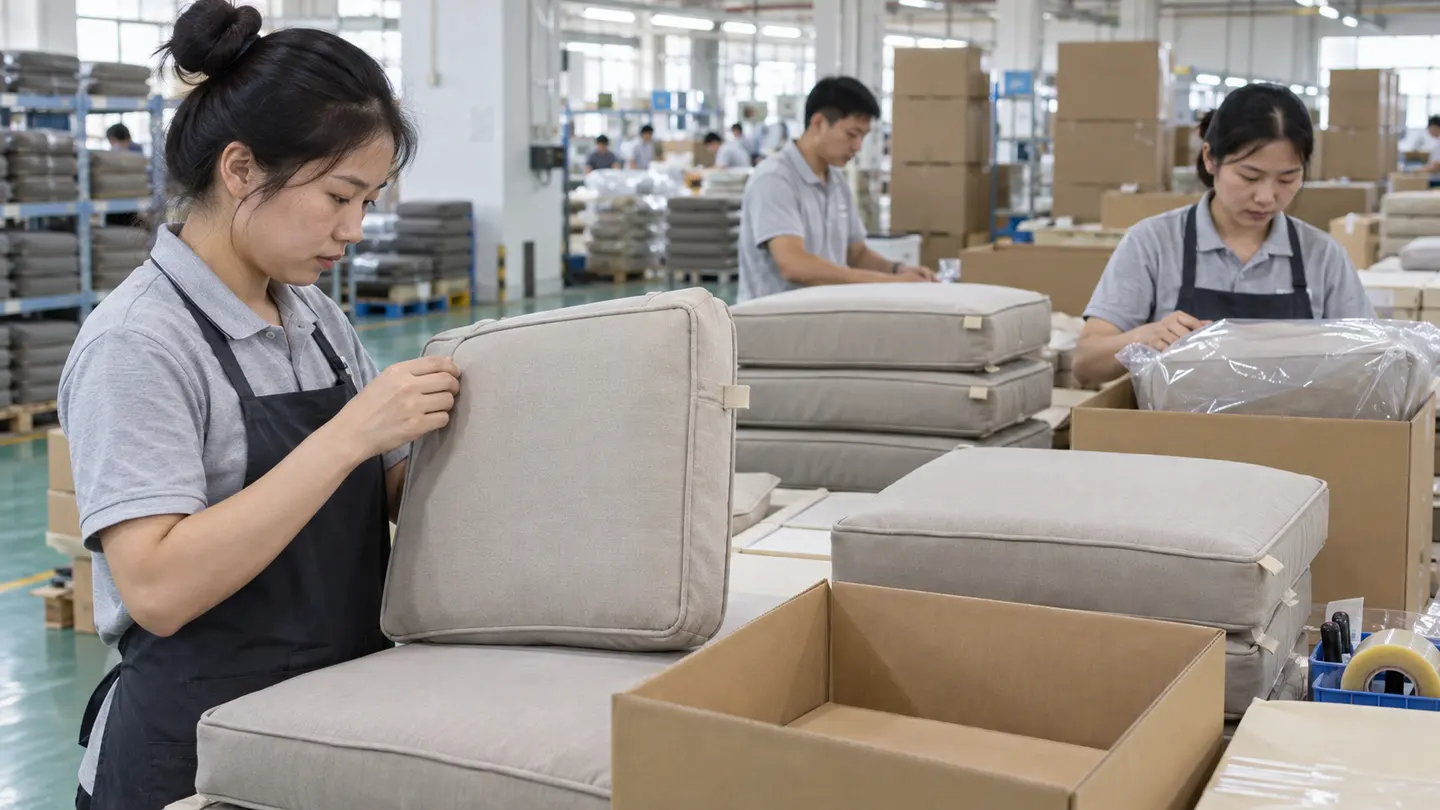
Position: After “Use the sample to validate the whole system”
Caption: A quality technician verifies finished size and seam detail against the approved sample specification.
AI prompt: Photorealistic documentary quality-control scene in Shenzhen, China: Asian technician measuring a finished hospitality seat cushion and checking seam detail against a material swatch, clean factory worktable, natural industrial light, authentic upholstery textures, no logos or readable text.
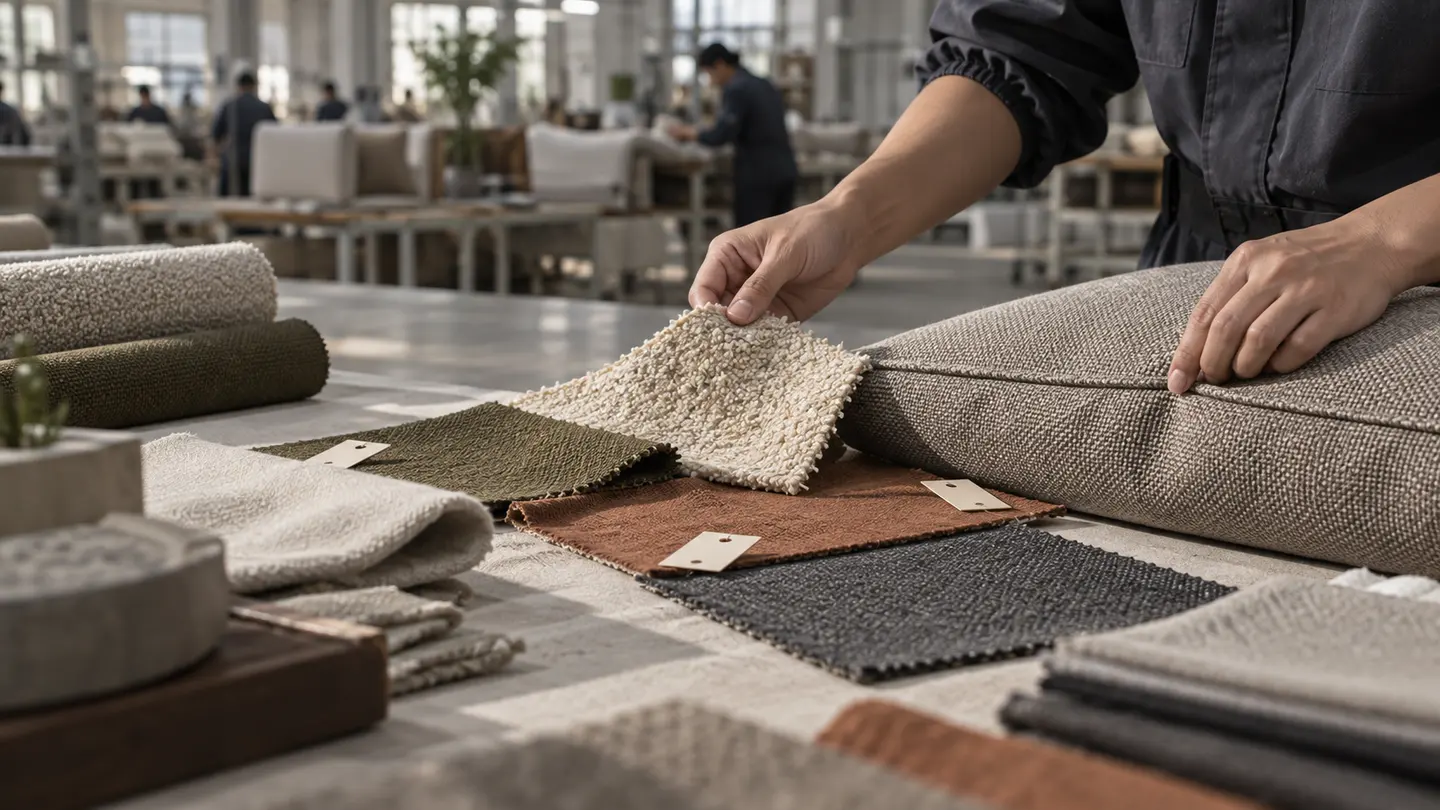
Position: After “Design cover construction for maintenance and fit”
Caption: Cover texture, piping, seams and zipper access are approved as part of the completed cushion.
AI prompt: High-resolution realistic product-detail photography of a tailored commercial seat cushion: woven upholstery texture, precise piping, neat corner seam and partially visible concealed zipper, soft studio daylight, premium B2B product catalogue style, no people, no logos, no text.
Frequently asked questions
What material is best for hotel seat cushions?
There is no single best material. The right choice depends on location, traffic, cleaning method, light exposure, design intent and support frame. Evaluate the complete cover-and-fill system with a physical sample in its intended application.
Is higher foam density always better for commercial cushions?
No. Density does not describe the entire comfort or support result. Specify density together with firmness, thickness, layering, cover tension and the supporting frame, then validate the assembled sample.
Should hospitality cushion covers be removable?
They should be removable when the project’s cleaning and replacement workflow benefits from it. Confirm zipper access, cover re-fitting, label identification and availability of replacement covers during sampling.
How do I specify a curved bench cushion?
Provide a full-size template when practical, or a carefully dimensioned drawing with reference points, curve radii and frame photos. Approve a fitted sample before bulk production and mark sectional orientation for installation.
Can fabric test data be used for the finished cushion?
Fabric data is useful but does not prove every aspect of the finished cushion. Construction, seams, filling, application and market requirements still matter. Agree the relevant scope and evidence for the complete product.
Enquiry popup plan
Trigger: Show after 40% scroll, after 30 seconds on page, or on desktop exit intent; suppress after a completed submission.
Popup title: Request a hospitality cushion material brief
Copy: Tell us the seating application, frame, cleaning routine and target style. We will outline the material decisions to resolve before sampling.
Fields: Required: Name, Email. Optional: Company, Project Type, Message. Do not request a phone number.
Button: Request Material Brief
Specify hospitality cushions with fewer surprises
Email info@cushionnook.com with your seating project details or use the enquiry form to request a sample-ready material brief.
Get a Quote →