Last updated: September 17, 2026 · 10–12 minute read
Custom Cushion Lead Time: How to Plan Samples, Production and Delivery
A custom cushion lead time is a chain of decisions and dependencies, not just sewing days. Buyers get more reliable delivery when they map sampling, materials, approvals, production, inspection, packing and freight booking before confirming a project date.
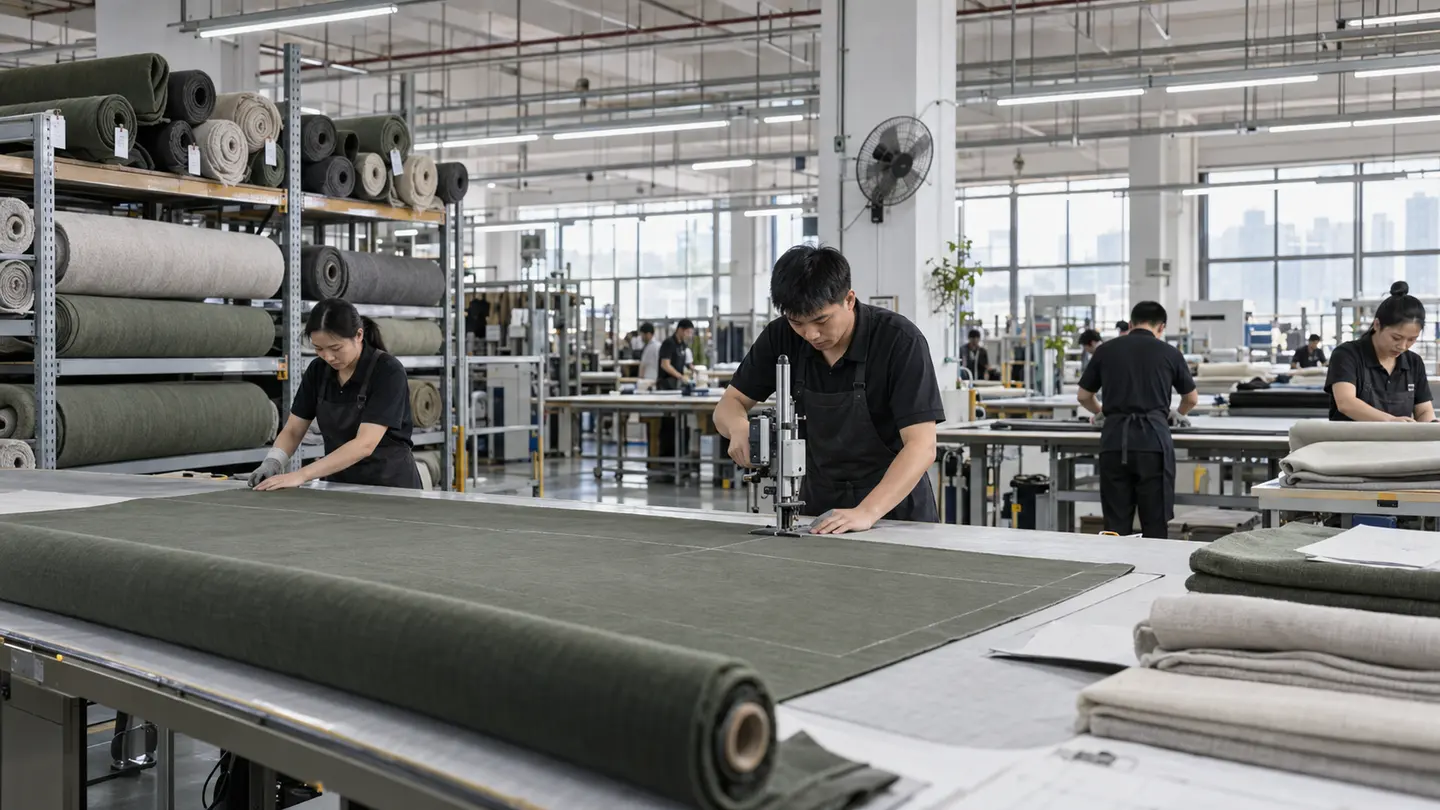
Custom cushion schedules depend on approved materials and a controlled production sequence.
Quick answer: how long does custom cushion production take?
Custom cushion timing depends on product complexity, material availability, sample revisions, order quantity, production capacity, quality checks, packing and transport booking. Rather than relying on a generic number of days, ask the supplier for a milestone schedule showing what must be approved or received before the next stage can start.
The most common delays occur before bulk sewing: incomplete drawings, unsettled materials, artwork changes, missing approvals, custom fabric or trim lead time and late packing decisions. A realistic plan makes these visible early.
1. Map the full delivery path
Work backwards from the required arrival or installation date. Allow time for destination transport, port or local delivery, shipment inspection, packing completion, bulk production, material arrival, sample approval and design clarification. Add contingency appropriate to the project rather than treating every step as certain.
Use milestones with an owner for each: buyer confirms drawing; factory confirms assumptions; sample is made; sample is approved; bulk material is released; first-off is approved; production is completed; inspection is passed; goods are packed; forwarder receives release. A schedule without ownership can look fast but still stall.
Typical planning dependencies
- Dimensioned brief and furniture/installation details.
- Fabric, fill, trim, artwork and label confirmation.
- Sample production, courier transit and buyer review.
- Bulk material supplier lead time and MOQ confirmation.
- Factory production window, first-off and in-process checks.
- Inspection, rework if required, packing and freight booking.
2. Treat sampling as a schedule gate
Sampling resolves decisions that define the bulk product. A sample cycle can include drawing review, material sourcing, prototype construction, courier time, buyer feedback and a revision. Do not tell a customer that production is “starting” if final cover, fill, artwork, fit or packing is still undecided. That creates pressure to substitute materials or skip review later.
Define the sample status: development prototype, colour/material proof, fitted sample, pre-production sample or approved golden sample. State what each stage proves and what remains open. Our sampling guide provides a controlled approval process.
3. Confirm material lead time and MOQ early
Custom fabric colour, printing, embroidery, foam conversion, labels and cartons can each have their own supplier lead time and minimum. A supplier may be able to sew quickly but still wait for the final fabric, print proof or custom carton. Ask for material readiness separately from factory capacity.
List each critical component, its supplier, approval status, order date and expected arrival. If a buyer changes a material after it is ordered, update the delivery plan honestly. The MOQ guide explains why material minimums and SKU complexity are often linked to timing.
4. Reserve production only after the product is defined
Factories schedule labour, cutting, sewing, filling and packing around confirmed orders. A production reservation is more meaningful when drawings, materials and commercial terms are sufficiently settled. If a project needs a fixed production slot, identify which decisions must be locked by a stated date and what happens if approval arrives late.
For multi-SKU or fitted projects, plan first-off review before the main run. Long benches, printed pillows and outdoor cushions can each reveal a production issue that is cheaper to correct early. A first-off checkpoint may add a planned day or two, but it reduces the chance of a much longer rework delay.
5. Include quality control and rework in the schedule
Quality control should not be scheduled after goods are already promised to a forwarder. Allow time for material checks, first-off review, in-process control, pre-shipment inspection and any corrective work. Agree who approves a release and whether an independent inspection is required. Give inspectors the approval pack in advance so they can work efficiently.
Factory testing and shipment inspection protect the delivery, but they need time. A schedule that assumes every unit passes first time leaves no room for responsible correction. Our shipment inspection guide lists the final checks to plan.
6. Plan packing and freight as product dependencies
Export packing may affect carton dimensions, recovery time, labels, storage and shipment booking. Confirm whether cushions are packed flat, compressed, nested or sectioned, and whether cartons or pallets are customised. For project seating, prepare installation diagrams and carton marks before goods are packed, not when the truck arrives.
Freight booking depends on the actual ready date, cargo volume, destination and transport mode. The factory can prepare goods, but it should not promise a final delivery date without the buyer or forwarder confirming the freight side. Keep production completion and shipment departure as separate milestones.
7. Communicate changes with a revised plan
Changes are normal in custom development. The useful response is not to hide their impact but to update the milestone schedule: what changed, which material or operation is affected, what new approval is needed and how the delivery date moves. Keep one current timeline shared by buyer, factory and any project manager.
For a hotel opening or retail launch, distinguish hard dates from preferred dates. If installation is immovable, consider phasing non-critical SKUs, using approved stock materials or simplifying selected details—but only with explicit buyer approval. Do not silently downgrade the product to preserve a date.
PROJECT SUPPORT
Need a realistic custom cushion timeline?
Send your target date, product type, quantities and destination. We will help identify the sample, material, production, inspection and packing milestones to plan.
Build a Production Timeline →Common lead-time mistakes
- Counting only sewing days and ignoring samples, materials and inspection.
- Releasing bulk work before a final product reference exists.
- Assuming custom material availability without confirmation.
- Booking freight before packing and inspection readiness are understood.
- Leaving no time for first-off correction or rework.
- Communicating a preferred date as though it were a confirmed milestone plan.
Review the critical path at every approval gate
A milestone plan is useful only when it is reviewed after decisions change. At drawing approval, material confirmation, sample approval and first-off review, ask what now controls the delivery date. It may be a fabric supplier, custom carton, print proof, factory capacity, inspection appointment or freight booking. Name that constraint and the owner responsible for moving it.
Keep the plan visible to the buyer and factory rather than treating it as an internal spreadsheet. A transparent critical path makes it easier to choose between waiting for a preferred material, approving a defined alternative or phasing a non-critical SKU. It also prevents a team from claiming a date is secure when its main dependency remains unresolved.
Use a change-impact note
When a buyer changes a fabric, artwork, fill, packaging or quantity, issue a brief change-impact note. State the old and new requirement, affected sample or material, cost impact, MOQ impact, new approval needed and estimated schedule movement. This is not bureaucracy for its own sake; it stops a small-looking request from becoming an undocumented delay or product substitution.
For a fixed opening or launch, distinguish a change that is essential to product quality from one that can be deferred to a future release. Make that decision explicitly with the buyer, rather than allowing the factory to choose silently under time pressure.
Assign roles before production begins
List who owns each gate: buyer product approval, factory technical review, material release, sample courier, quality release, inspection booking, freight instruction and receiving contact. Include a backup contact for time-sensitive decisions. This simple responsibility map reduces the waiting periods that often cause custom projects to miss an otherwise realistic schedule.
After delivery, compare the actual sequence with the plan. Record which milestones moved and why. The next project can then use real experience to set more credible sample and production timelines.
Manage lead time through a visible critical path
A custom cushion schedule is more reliable when the buyer and supplier can see the decisions that control it. Create a simple critical path from quote acceptance to dispatch: specification release, artwork or drawing approval, material confirmation, sample build, buyer approval, bulk material release, production start, in-process review, packing, shipment inspection and booking. Assign an owner and planned date to each step. This does not guarantee that every event will happen exactly on that date, but it reveals early when an unresolved decision is consuming the time reserved for later work.
Some dependencies are easy to overlook. A custom fabric color may need a lab-dip or strike-off; a shaped cushion may require a site template; labels may need buyer artwork approval; a branded carton can have its own material lead time; and an inspection may require a booking window. Ask the supplier to identify the critical materials and approvals for the actual product rather than relying on a generic production promise. The buyer can then decide where an earlier decision, phased order or simplified option would reduce risk.
Use change control to protect the agreed delivery plan
Changes after approval are normal, but they must be visible. If the buyer adds a colorway, changes an insert, revises artwork, alters the carton requirement or moves the destination, record the change and ask for its effect on cost, material availability, sample need and delivery date. A change may be minor visually yet affect an upstream procurement step. Treating it as a formal update protects both parties from believing the original schedule is unchanged when the production file has materially moved.
For a multi-SKU program, identify which items are on the critical path and which can run in parallel. Do not let one late artwork file or special trim silently hold all cartons if a staged shipment is commercially acceptable. Conversely, do not split an order without checking whether the receiving site, shipping documents and packaging configuration can support it. The schedule should reflect the buyer’s actual launch and installation requirements, not only factory output dates.
Set milestone communication and release rules
Agree when the supplier will update the buyer and what information each update includes. Useful milestones are sample dispatched, sample approved, bulk materials confirmed, production started, first-off checked, packing completed, inspection ready and shipment released. At each point, confirm the SKU revision, quantity, key material and outstanding action. This creates an early-warning system: a missing approval can be escalated while alternatives remain possible, rather than becoming an emergency at dispatch.
Before booking shipment, reconcile the final product file, quantities, packing list, inspection result and destination instructions. If the buyer needs an installation date, leave realistic time for receiving, unloading and preparation after arrival; factory completion is not the same as installed readiness. A visible critical path and disciplined change record are the most credible tools for managing lead time without making promises that the project’s own dependencies cannot support.
Use a recovery plan when a milestone moves
If a critical approval or material date slips, ask for a revised schedule that shows the actual downstream effect and available recovery options. These may include faster buyer approval, an alternative approved material, a revised packing sequence, partial shipment or a changed installation plan. Assess the operational tradeoff before selecting one; an accelerated factory date can be unhelpful if it creates an unmanageable receiving or inspection constraint.
Keep the revised plan with the order record and confirm the new responsibilities in writing. Clear recovery planning is not about blaming a party for every delay. It gives the project team a realistic way to decide what can still be protected—product quality, launch date, budget or order completeness—when the original timeline changes.
Keep the buyer’s internal approvals on the schedule
Factory lead time is only one part of a launch plan. Add the buyer’s artwork review, purchase-order release, payment steps, destination booking, inspection decision and installation preparation to the shared schedule. Naming these dependencies makes it easier to see whether a late internal answer is putting material release or shipment at risk, and gives both teams a realistic basis for prioritizing the next action.
Conclusion: build a schedule from approved dependencies
Reliable custom cushion delivery comes from a transparent sequence: define product, approve sample, secure materials, reserve production, inspect goods, pack correctly and release to freight. A milestone plan gives buyers more control and reduces the pressure for last-minute substitutions or unverified shipment releases.
Photography plan for this guide
Use original factory photography where possible. The prompts below are production references for realistic imagery, not claims about a specific order.
Position: Below the introduction
Caption: Custom cushion schedules depend on approved materials and a controlled production sequence.
AI prompt: Photorealistic documentary Shenzhen factory scene: Asian production planner reviewing fabric swatches, cushion sample and a simple non-readable production schedule at a clean desk beside cutting area, natural industrial light, no logos.

Position: After “Include quality control and rework in the schedule”
Caption: First-off review and final inspection need dedicated time before shipment release.
AI prompt: Realistic Shenzhen cushion factory photo: Asian quality technician inspecting a first-off tailored cushion with measuring tape and approved sample nearby, clean bright workstation, authentic upholstery texture, no readable text or logos.

Position: After “Plan packing and freight as product dependencies”
Caption: Packing completion is a delivery milestone, not an afterthought after production.
AI prompt: Photorealistic export dispatch scene in Shenzhen: protected custom cushions beside plain sealed export cartons and organised shipment staging, Asian warehouse staff checking cargo, natural industrial light, no brands or readable text.
Frequently asked questions
What affects custom cushion lead time most?
Material availability, sample revisions, product complexity, quantity, factory capacity, inspection needs, packing and freight booking all affect timing. A milestone schedule is more reliable than a generic number of days.
When should bulk cushion production start?
After the key product decisions are approved: drawing, materials, construction, sample, quantity, packing and commercial terms. Any unresolved item should be visible as a schedule risk.
How can I reduce custom cushion lead time?
Provide a complete brief, approve samples promptly, use confirmed material options where appropriate, limit late changes and plan inspection and freight early. Do not reduce time by skipping quality controls.
Should shipment inspection be included in lead time?
Yes. Schedule the inspection before freight release and allow reasonable time for any correction or re-inspection.
What is a first-off check?
It is a review of the first completed bulk-production unit against the approved sample and specification before the full run proceeds. It is an important planned quality gate.
Enquiry popup plan
Trigger: Show after 40% scroll, after 30 seconds on page, or on desktop exit intent; suppress after a completed submission.
Popup title: Request a custom cushion timeline
Copy: Share your target delivery date and project details. We will send the milestones to confirm before production is scheduled.
Fields: Required: Name, Email. Optional: Company, Target Delivery Date, Message. Do not request a phone number.
Button: Request Timeline Review
Plan your custom cushion order around real dependencies
Email info@cushionnook.com or use the enquiry form to discuss samples, materials and delivery planning for your project.
Send Your Requirements →