Last updated: September 17, 2026 · 10–12 minute read
How to Request an Accurate Custom Cushion Quote
An accurate custom cushion quote begins with a defined product, not a photograph and a target price. A concise buyer brief lets suppliers quote the same construction, materials, packing and delivery scope—making comparisons meaningful.
A useful quote begins with dimensions, material direction, quantity and intended application.
Quick answer: what information is needed for a custom cushion quote?
Provide product application, drawings or dimensions, supporting furniture details, cover fabric and colour direction, filling or comfort objective, construction details, quantity by SKU, packaging, destination, delivery target and any documentation requirement. Ask each supplier to state assumptions, exclusions, MOQ and quotation validity in writing.
A quote is only comparable when it describes the same finished product. If one supplier assumes a different foam, fabric, zipper, trim or carton, the lowest headline number may not be the lowest cost for the product you intend to buy.
1. Begin with the product application
Describe where and how the cushion will be used: hotel bench, restaurant booth, retail throw pillow, outdoor terrace, poolside lounge or residential collection. State indoor/outdoor exposure, traffic, cleaning routine, support frame and replacement expectations. This tells the factory what questions to ask about cover, filling, attachment and maintenance.
Include photos of the furniture or setting. A cushion’s finished dimensions and comfort depend on the deck beneath it. A product that looks similar in an image may need a different build for a solid bench, webbed lounge frame or curved banquette. Our materials guide shows why application must come before material selection.
2. Provide dimensions that can be produced
Send a dimensioned drawing with units, finished length, depth, thickness, curves, cut-outs, returns and key measurement points. For fitted seating, add frame photos, templates and section orientation. State whether the cushion should sit flush, have an overhang or leave a planned gap. For curved benches, a template or detailed datum-point drawing is safer than an overall length.
Identify the visual front, seam, zipper, piping and attachment locations. For multi-piece cushions, number each SKU or section and show how it installs. Use our measurement guide if the product fits built-in furniture.
3. Name materials and construction—or ask for options clearly
If you know the materials, provide supplier codes, swatches, colour references and construction requirements. Include cover fabric, filling or foam objective, zipper, piping, labels, ties, straps, non-slip underside, print or embroidery and packaging. If you do not know the exact material, state the functional need rather than asking for “best quality”: for example, removable hotel-bench cover, quick-dry poolside seat, wipeable restaurant booth or premium retail pillow.
Ask the supplier to offer clearly named options with trade-offs. A quote should not hide a material choice behind generic terms such as “high density foam” or “outdoor fabric.” Use a physical sample to approve the final system before bulk production.
4. Break quantity down by SKU, colour and size
State quantity for each size, colour, print or section. A total quantity may not tell the supplier whether fabric, labels, print or carton minimums can be shared. A range of 500 identical cushions differs from 10 colours of 50 pieces each. Include expected reorder quantities if they are relevant to material planning.
Request a component-level MOQ explanation: finished product, fabric/colour, print, fill conversion, label and carton. This lets you adjust the assortment intelligently instead of accepting or rejecting a single unexplained MOQ. Our MOQ guide provides a comparison framework.
Quote-request checklist
- Use case, target customer and cleaning/exposure conditions.
- Dimensioned drawing, furniture photos, templates and section map.
- Cover, fill, trim, print, label and attachment requirements.
- Quantity by SKU, size, colour and expected reorder pattern.
- Retail/export packing, carton marks and destination.
- Target delivery date, Incoterm discussion and required documentation.
5. Define packaging, destination and commercial scope
Explain whether the product is for retail, project installation or a mixed channel. State individual protection, hangtags, barcode or insert requirements, carton quantities, section labels and shipping marks. Give the destination country and delivery target so the supplier can identify questions around packing, documents and freight readiness.
Clarify what commercial scope you want quoted: product only, export packing, inspection, freight estimate or a named Incoterm. The supplier should state what is included and excluded, currency, price validity, payment assumptions and how changes to material or packing affect the quote. Do not compare factory prices with different delivery or packing scope as if they were identical.
6. Ask suppliers to list assumptions and exclusions
This is one of the most useful buyer practices. Ask every supplier to identify assumptions about cover material, foam build, trims, labels, packing, sample cost, tooling or artwork setup, testing, inspection and freight. A transparent assumptions list does not make a supplier expensive; it makes the quote reviewable.
When quotes differ, compare the product lines rather than negotiating only the total. A lower price can be based on a lighter fabric, lower fill, simpler zipper, omitted piping, basic carton or a material substitution. Decide whether those differences are acceptable to the product strategy before using price as the selection criterion.
7. Use the quotation to launch a controlled sample process
The selected quote should become the basis for sampling, not the final product proof. Confirm the drawing, materials, samples, packing and acceptance criteria with the supplier. Record approved changes and update the commercial terms if a revision changes material use, construction, MOQ or lead time. A sample lets the buyer test fit, hand feel, cover details and packed presentation.
Factory testing and first-off review should compare bulk goods with the final sample and specification. During shipment inspection, verify dimensions, materials, labels, SKU mix and packing against the approved order. The shipment inspection guide shows how the quote becomes a release reference.
PROJECT SUPPORT
Need a quote-ready custom cushion brief?
Send your product idea, dimensions, quantity and destination. We will help organise the information suppliers need to quote the same finished product.
Send a Complete Quote Request →8. Avoid common quote-request mistakes
- Sending only a photo and asking for a “best price.”
- Giving total quantity without SKU, size or colour breakdown.
- Leaving material, filling, packing or destination undefined.
- Comparing quotes with different Incoterms or inclusions.
- Not requesting MOQ and assumption breakdowns.
- Treating the quote as final approval without a sample process.
Normalize quotes before comparing suppliers
A low unit number is not a meaningful comparison if each supplier has priced a different cushion. Create a quote comparison sheet that repeats the agreed specification beside each offer: finished dimensions and tolerance, cover material, foam or fill, removable-cover construction, piping or ties, label, packaging, quantity by SKU, sample charge, lead time, Incoterm and destination. Mark every assumption that remains open. This turns a collection of email attachments into a purchasing decision that can be discussed with merchandising, operations and finance.
When an offer differs, ask a precise follow-up question instead of asking for a general discount. For example: is the quoted insert density or fill weight the same? Does the cover include the requested backing and zipper? Are individual polybags, master cartons, barcodes or compression included? Is the price based on one colorway, and what changes if the size mix moves? Clear follow-up questions help suppliers revise accurately and prevent the buyer from selecting an apparently lower quote that excludes a necessary element.
Build a decision record that survives handover
After selecting a direction, retain the approved brief, supplier quotation, revisions, sample request and key email clarifications in one project file. Note the person who approved the major tradeoffs: fabric category, comfort target, packaging level, delivery term and final quantity. This record becomes valuable if the project changes hands internally or if a repeat order is placed months later. It also makes a better production handover because the supplier can see not only the final price, but the assumptions that led to it.
For projects with multiple SKUs, give each configuration a clear internal name and supplier reference. A “navy bench cushion” may have several lengths, corner styles or attachment methods; grouping them under one vague name creates errors in price, sample and shipment inspection. A simple line-item structure—SKU, drawing/photo, size, fabric, fill, packing and quantity—usually does more for quote accuracy than a long descriptive email.
Use the quotation to plan the sample-to-bulk transition
The selected quotation should lead directly into a controlled sample plan. Confirm which quoted elements will be represented in the sample, which may be substituted temporarily for development and what must be approved before bulk materials are released. Review dimensions on the intended furniture, cover fit, seam placement, closure access, comfort, color under expected lighting, labels and packaging. Photograph the approved sample and link those photos to the production PO or product file.
Before production, reconcile the final quote with the approved sample and any changed customer requirements. If the shipment destination, carton need, material or order mix has changed, request a written update rather than assuming the original total remains valid. This final alignment protects the buyer’s budget and gives the factory a clear, auditable instruction for material purchasing, factory testing, production and shipment inspection.
Ask questions that make a supplier’s assumptions visible
A professional quote request is a conversation, not a one-way form. Once the initial brief is shared, invite the supplier to identify the missing information that affects price, construction or schedule. Ask what material assumptions were used, which dimensions need confirmation, whether the proposed fill is suitable for the stated application, whether the requested packing is included, which MOQs apply by color or component, and what approvals are needed before bulk material can be ordered. A supplier that raises relevant questions is giving the buyer useful decision information, not simply making the process slower.
Keep answers in the project record and update the specification as choices are made. If a target price requires a construction change, state exactly what is changing and request an updated line item. If the buyer cannot yet decide a fabric or packaging detail, compare two defined options rather than asking for a meaningless “best price.” This creates a quote that can be reviewed by colleagues and later reconciled with the approved sample, rather than a number detached from the product that will actually ship.
Use a phased quote for uncertain or complex projects
For a new range or large fit-out, it can be sensible to separate development and production decisions. The first phase may cover a sample, material swatches, technical review or a measured template; the second covers the released bulk configuration and packing. This lets the buyer learn from the physical sample before committing to quantities or special materials. It also makes cost changes easier to understand, because the supplier can show which elements are fixed and which depend on final customer requirements.
For multi-location projects, request quantities and pricing by SKU, not only a combined total. Include each bench length, corner piece, pillow size, colorway or attachment method. Confirm whether cartons will be grouped by location and whether individual labels are needed for installation. The more clearly the line items reflect the receiving workflow, the easier it is to compare offers and prevent a correct total quantity from containing the wrong mix of components.
Close the loop after delivery
The quotation file remains useful after the shipment leaves the factory. Retain the final specification, approved sample, purchase order, packing list, inspection record and key correspondence. When the goods are received, note any fit, packing or installation feedback by SKU. This gives the buyer a factual base for a reorder, warranty discussion or a future cost-saving review. It also helps distinguish a true product issue from a change that was requested after the original quote.
Clear quote preparation is therefore a form of risk control. It creates a shared understanding of what is being priced, how it will be approved, how it will be packed and what will be checked before shipment. That is the foundation for a productive supplier relationship and a cushion program that can scale beyond the first inquiry.
Set a quotation validity and review point
Ask the supplier to state the validity period and the assumptions most likely to affect a later revision, such as material availability, exchange-sensitive freight, quantity mix or custom packaging. Before issuing the bulk purchase order, reconcile these points with the approved sample and current destination. A defined review point keeps the final commercial agreement aligned with the product that will be manufactured.
Conclusion: a complete brief produces a comparable quote
Accurate custom cushion pricing comes from specificity. Define application, dimensions, materials, quantity, packing, destination and schedule; then request clear assumptions and exclusions. Use the selected quotation to guide a physical sample and controlled production release. This gives buyers the information needed to select a supplier on value, not guesswork.
Photography plan for this guide
Use original factory photography where possible. The prompts below are production references for realistic imagery, not claims about a specific order.

Position: Below the introduction
Caption: A useful quote begins with dimensions, material direction, quantity and intended application.
AI prompt: Photorealistic B2B procurement scene: custom cushion sample, dimensioned drawing, fabric swatches, simple quantity sheet and plain carton reference on clean table, Asian buyer and factory developer hands visible, natural daylight, no readable text or logos.
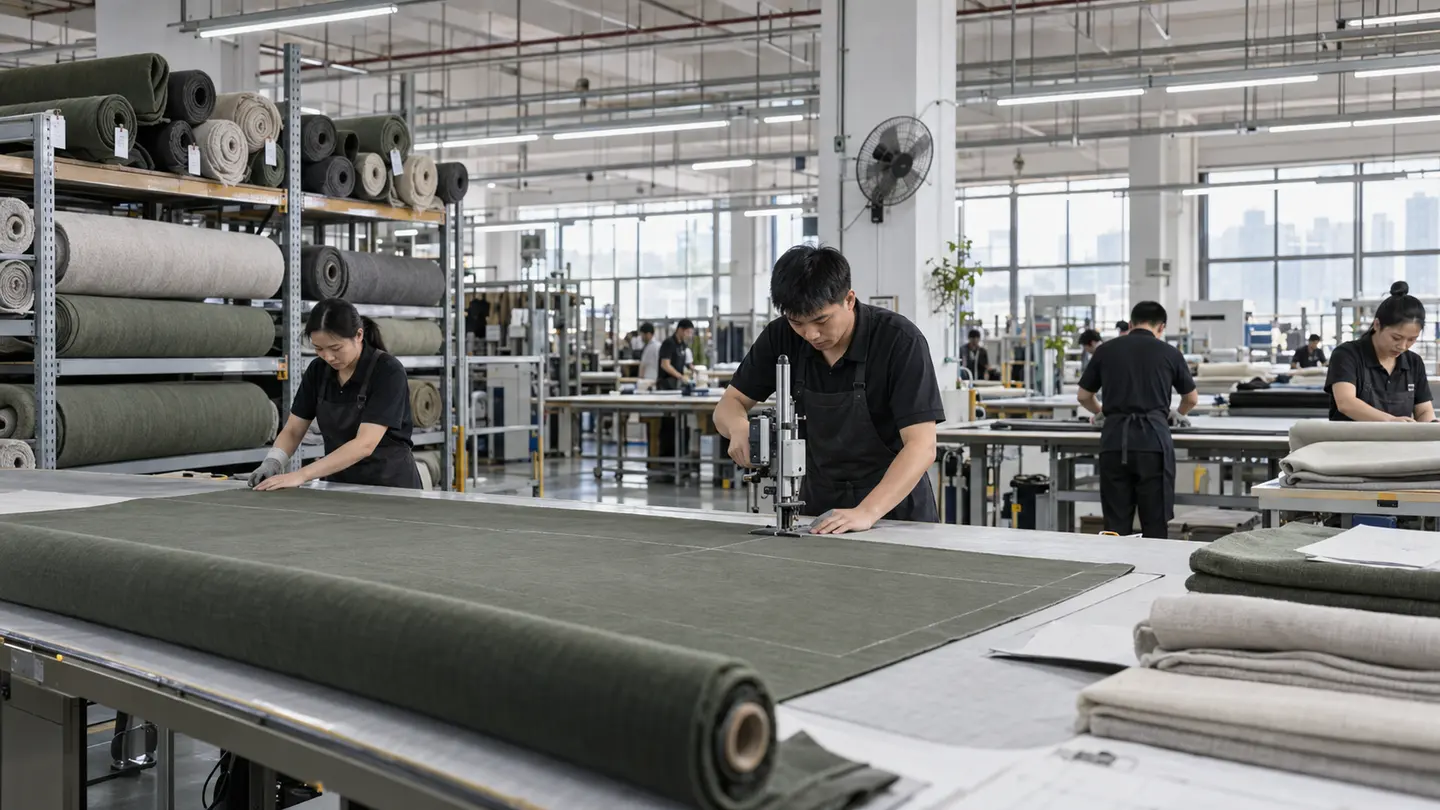
Position: After “Name materials and construction—or ask for options clearly”
Caption: Cover material, direction and construction assumptions affect yield and finished cost.
AI prompt: Documentary photorealistic Shenzhen factory photo: Asian textile worker reviewing upholstery fabric and cushion pattern layout on cutting table, clean organised workshop, visible woven texture, no logos or readable text.

Position: After “Use the quotation to launch a controlled sample process”
Caption: The selected product brief becomes the reference for sample approval and later inspection.
AI prompt: Realistic Shenzhen quality-control image: Asian technician checking a finished cushion beside fabric swatches and non-readable approval sheet, clean workstation, natural industrial lighting, no logos.
Frequently asked questions
What should I send for a custom cushion quote?
Send product use, drawings or dimensions, furniture photos, cover and fill direction, construction details, quantity by SKU, packing, destination, target date and any documentation needs.
Why do two custom cushion quotes differ so much?
They may assume different fabric, foam, trim, labels, packing, MOQ, inspection or delivery scope. Ask for a line-by-line assumptions and exclusions list before comparing totals.
Can I get a quote without exact materials?
Yes, if you describe the application and performance or appearance goals. Ask the supplier to offer named material options and state the assumptions; approve the final option through sampling.
Should freight be included in a custom cushion quote?
Clarify the desired commercial scope and Incoterm. Product price, export packing, inspection and freight may be quoted separately; compare suppliers on the same scope.
Does a quote guarantee final production quality?
No. A quote defines commercial assumptions. A controlled sample, approved specification, first-off review and shipment inspection are still needed to control finished quality.
Enquiry popup plan
Trigger: Show after 40% scroll, after 30 seconds on page, or on desktop exit intent; suppress after a completed submission.
Popup title: Prepare an accurate cushion quote request
Copy: Share your product type, dimensions, quantity and destination. We will send the fields needed for a comparable factory quotation.
Fields: Required: Name, Email. Optional: Company, Estimated Quantity, Message. Do not request a phone number.
Button: Send Quote Request
Request an accurate custom cushion quotation
Email info@cushionnook.com or use the enquiry form with your drawings, use case and quantity to begin a structured quote and sample discussion.
Get a Quote →