Last updated: September 17, 2026 · 10–12 minute read
OEM vs. ODM Cushions: Which Development Model Fits Your Brand?
OEM and ODM cushion development are not simply two pricing options. They determine who brings the design, who controls materials and approvals, how sampling works and what evidence is needed before a product can launch under a buyer’s brand.
OEM and ODM decisions start with clarity about what is existing, what is custom and who approves each product choice.
Quick answer: what is the difference between OEM and ODM cushions?
In an OEM cushion project, the buyer typically provides a defined design or technical specification and the manufacturer produces it to that requirement. In an ODM project, the manufacturer starts from its existing product platform or development capability and the buyer selects or adapts it. In practice, responsibilities should be written clearly because projects often sit between the two models.
The right choice depends on the buyer’s design readiness, required differentiation, speed to market, material control, commercial volume and ability to approve samples. Neither model is automatically better; each places different responsibilities on the brand and factory.
1. Understand the practical OEM workflow
OEM is suited to buyers who have a defined product concept: drawing, dimensions, artwork, cover construction, materials, labels, packing and acceptance requirements. The factory reviews manufacturability, makes samples, sources or confirms components and produces to the approved reference. The buyer retains strong control but must provide timely and complete decisions.
OEM works well for fitted bench cushions, distinctive hospitality seating, custom printed pillows and collections where brand-specific materials or details matter. It also demands a disciplined product file. A drawing alone may not define foam build, zipper placement, fabric direction or carton requirements. Use the sample process guide to build a controlled approval path.
2. Understand the practical ODM workflow
ODM can start from a manufacturer’s existing cushion shapes, constructions, fabric options or packaging approaches. The buyer may select a base design and adapt colour, cover, label, insert, trim or packing. This can shorten early development when the base product already suits the intended market, but it does not remove the need for a clear sample and specification.
Ask what is truly existing and what is new development. A product shown in a catalogue may still need new fabric sourcing, custom print, different fill, labels or cartons. Confirm how these changes affect MOQ, sample time, pricing and who approves the final revision. Avoid calling a project “ODM” as a substitute for documenting the product.
3. Compare design control and speed honestly
OEM generally gives the buyer more control over design and materials, but decisions and sample revisions can take longer. ODM may provide a faster starting point, but the buyer should verify that the existing construction, material quality and customer experience fit the brand. Speed is only useful if the product can still be approved, inspected and supported after launch.
Use a decision table internally: what must be unique, what can use an existing platform, what material or artwork is non-negotiable, what launch date matters and what reorder continuity is required. This reveals whether an adapted base design is appropriate or whether a full OEM brief is worth the development effort.
Questions to decide the model
- Do you already have a buildable drawing and product specification?
- Which details must be brand-exclusive: shape, material, artwork, fill, label or packaging?
- Can an existing construction meet the target application and quality level?
- Who owns artwork, approval, material choice and market-facing claims?
- What quantity and launch schedule justify custom development?
4. Keep intellectual-property and confidentiality discussions specific
For OEM work, identify what the buyer provides: drawings, artwork, patterns, logo files, material selections or unique construction. Agree how files and samples are handled and who may access them. For ODM, be transparent about which elements are part of the manufacturer’s existing platform and which are developed specifically for the buyer.
Do not assume a label change creates exclusive product ownership. If exclusivity, tooling ownership, pattern control or confidentiality matters, define it in a suitable written commercial agreement with appropriate advice. The product-development file should still identify the current revision and approved materials regardless of the commercial model.
5. Plan sampling and materials under either model
Both OEM and ODM need physical approval. An existing ODM sample may validate shape, but a private-label order needs confirmation of the selected cover, fill, label, packaging and any modified construction. An OEM prototype may need a series of revisions before it becomes a golden sample. The sample’s status should be clear: existing reference, development sample, revised sample or bulk-production reference.
Material choices affect both models. Custom fabric colour, printing, labels and cartons can introduce MOQ and lead-time constraints even when the cushion shape is existing. Our MOQ guide explains why a product platform does not eliminate component minimums.
6. Define quality, claims and handover ownership
Write who approves the final sample, who signs off artwork and labels, who supplies required destination-market content, and who releases production and shipment. The manufacturer should control production against the approved reference; the buyer should control brand and market decisions. Both parties need the same current specification for factory testing and shipment inspection.
For ODM products, do not assume an existing factory product has every document, test or label required by your market. Confirm the finished SKU, material changes and evidence scope. Our compliance planning guide outlines a cautious documentation process.
7. Choose a model that supports reorders
Launch is not the only milestone. Save the approved sample, materials, artwork, label files, packing specification and inspection record. For OEM, this preserves the buyer’s defined product. For ODM, it records exactly which base platform and adaptations were approved. Ask about material availability, residual fabric, change notifications and how future orders are quoted.
A clear reorder path matters especially for hospitality projects and private-label collections. It prevents a later order from becoming an untracked variation of the original product.
PROJECT SUPPORT
Need help choosing OEM or ODM for a cushion project?
Send your product readiness, target market, quantity and differentiation goals. We will help identify the development path and sample questions to clarify.
Choose a Development Path →Common OEM/ODM mistakes
- Calling a project OEM without providing a complete product brief.
- Assuming an ODM catalogue item needs no sample or technical review.
- Leaving ownership, confidentiality or exclusivity as an informal assumption.
- Ignoring custom material, label and packaging MOQ in an ODM project.
- Failing to control artwork, claims and buyer approvals in writing.
- Not retaining the final sample and SKU record for reorders.
Use a readiness review before choosing OEM or ODM
Before requesting prices, hold a short internal readiness review. Ask whether the product’s value comes from a unique shape, comfort specification, print, packaging story or retail positioning. Identify which points are already decided and which must be developed. A buyer with approved dimensions, artwork, target materials and a clear channel plan is usually ready for an OEM-style request. A buyer who needs to validate demand, test several aesthetics or launch an adjacent range quickly may gain more from an ODM starting point with controlled modifications.
Cost should be compared at the full project level. An OEM product may need tooling, more sample rounds, proprietary components or additional document review; it may also offer stronger differentiation once it is established. An ODM product may reduce development time, yet custom color, labels, inserts or packaging can still create material minimums and approval work. Request a quotation that separates development, sample, material and production elements so the team can see where a faster launch genuinely saves time and where it simply moves work later in the process.
Set commercial and creative boundaries in writing
Terms such as OEM and ODM do not settle ownership or exclusivity. If a project contains buyer artwork, patterns, packaging files, molds, technical drawings or confidential sales information, identify the files by revision and state how they may be used. If exclusivity is important, define the relevant product, market, period and conditions rather than relying on a broad verbal expectation. Likewise, catalogue images or supplier-developed shapes should not be assumed to transfer automatically to a buyer’s brand without a documented agreement.
For private-label programs, make the brand assets part of the sample approval pack: logo placement, label size, care label text, carton marking, photography references and approved color standard. This gives the factory production team a usable reference and gives the buyer a clear check at shipment inspection. The goal is not excessive paperwork; it is avoiding a launch delay caused by an unresolved logo, language or packaging detail after bulk work has started.
Control changes from approved sample to reorder
Both models benefit from a change-control record. Once the final sample is approved, lock a practical product file containing the SKU, dimensions and tolerances, material and fill codes, construction notes, artwork revision, packaging, labels and approval photos. If a requested change appears—whether a fabric replacement, a new colorway or a different insert—record its commercial and technical impact before production proceeds. A familiar visual appearance does not guarantee equivalent cover behavior, seat feel or packing volume.
On repeat orders, begin with that product file and confirm what remains unchanged. This helps the buyer protect a proven range while giving the supplier a consistent handover to cutting, sewing, filling and packing teams. OEM and ODM are therefore best understood as working models, supported by transparent decisions and a documented path from concept to reorder.
Choose a development route based on commercial risk
OEM and ODM selection is also a risk-management decision. An OEM program can support a distinctive shape, branded construction or tightly defined customer requirement, but it asks the buyer to make more decisions and validate more details before scale. An ODM route can shorten the path to a tested starting point, but it may limit how far a product can differ before new development, materials or minimums become necessary. Map the commercial question first: is the goal to test a new category, extend an existing range, meet a project deadline, protect a unique design or build a long-term replenishment program?
Then compare options against the same criteria: development cost, sample time, minimum order, material availability, degree of brand differentiation, document needs, packing flexibility, reorder control and ownership arrangements. Request a transparent breakdown rather than a single headline number. A buyer may find that an ODM base with approved label and cover changes is the right first release, while a future OEM version is developed after customer feedback. There is no universally superior model; the right model matches the evidence available, the target market and the decision the business needs to make now.
Define responsibilities at each development stage
A good project file identifies who supplies and approves each input. The buyer may own brand artwork, retail brief, target price, market and final sample approval. The factory may review manufacturability, propose construction options, prepare samples, control materials, inspect production and pack the finished goods. Some responsibilities are shared: color approval, care language, packaging layout and change decisions often require both parties. Naming these responsibilities prevents assumptions from turning into delays when production needs an answer.
Use a staged approval sequence: brief accepted, quotation assumptions confirmed, sample approved, production file released, first-off checked, shipment inspection completed and order closed with final references stored. At each stage, record the SKU revision and outstanding action. This structure works for both OEM and ODM projects and is especially useful when buyer contacts change or several teams contribute to a private-label launch.
Protect future reorders without freezing improvement
Once an item is successful, create a reorder baseline: approved sample images, dimensions, materials, fill, construction, labels, packaging, customer requirements and any agreed quality observations. This does not mean the product can never improve. It means a requested change—new fabric, revised zipper, different carton or alternate insert—is reviewed against a known version. The buyer can then decide whether it is a controlled revision, a new SKU or an unacceptable substitution.
This level of governance gives both parties a practical way to balance speed and differentiation. OEM and ODM labels are useful starting terms, but a documented, transparent workflow is what lets a cushion program launch confidently and remain manageable through repeat production.
Use the first order to validate the chosen model
After the first delivery, assess whether the OEM or ODM workflow met the buyer’s commercial need: was development effort appropriate, were approvals clear, did the product differentiate the range and can it be replenished efficiently? Record the answer with the product file. This gives the team evidence for choosing the same model, increasing customization or simplifying the next release.
Conclusion: match the workflow to your readiness
OEM and ODM can both create successful custom cushion products when the development model matches the buyer’s needs. Be clear about design control, existing versus new components, sample responsibility, materials, approvals and reorder records. That clarity is more valuable than the label alone.
Photography plan for this guide
Use original factory photography where possible. The prompts below are production references for realistic imagery, not claims about a specific order.
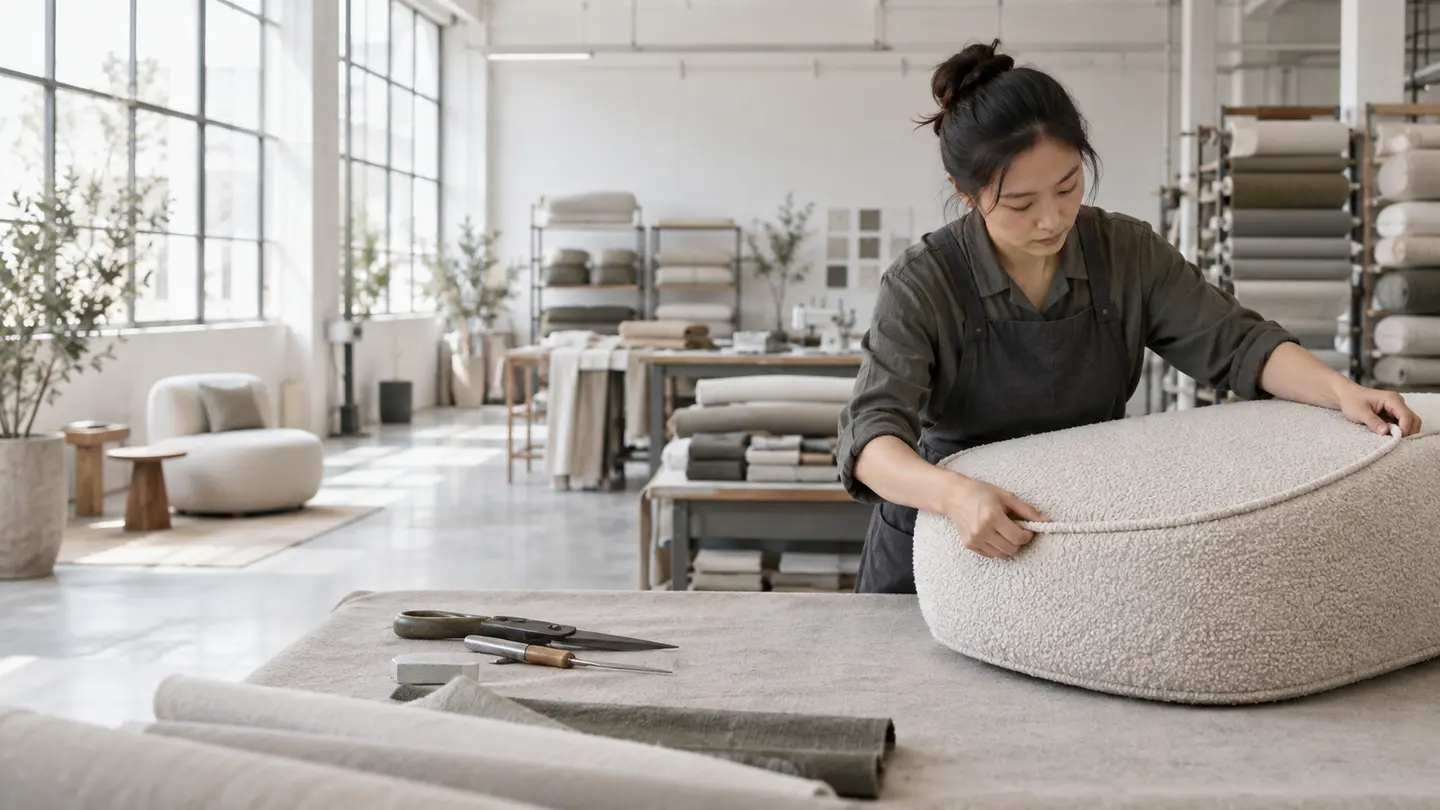
Position: Below the introduction
Caption: OEM and ODM decisions start with clarity about what is existing, what is custom and who approves each product choice.
AI prompt: Photorealistic B2B product-development scene in Shenzhen: Asian product developer reviewing cushion samples, fabric swatches and simple technical sketches on clean table, natural daylight, premium editorial realism, no logos or readable text.
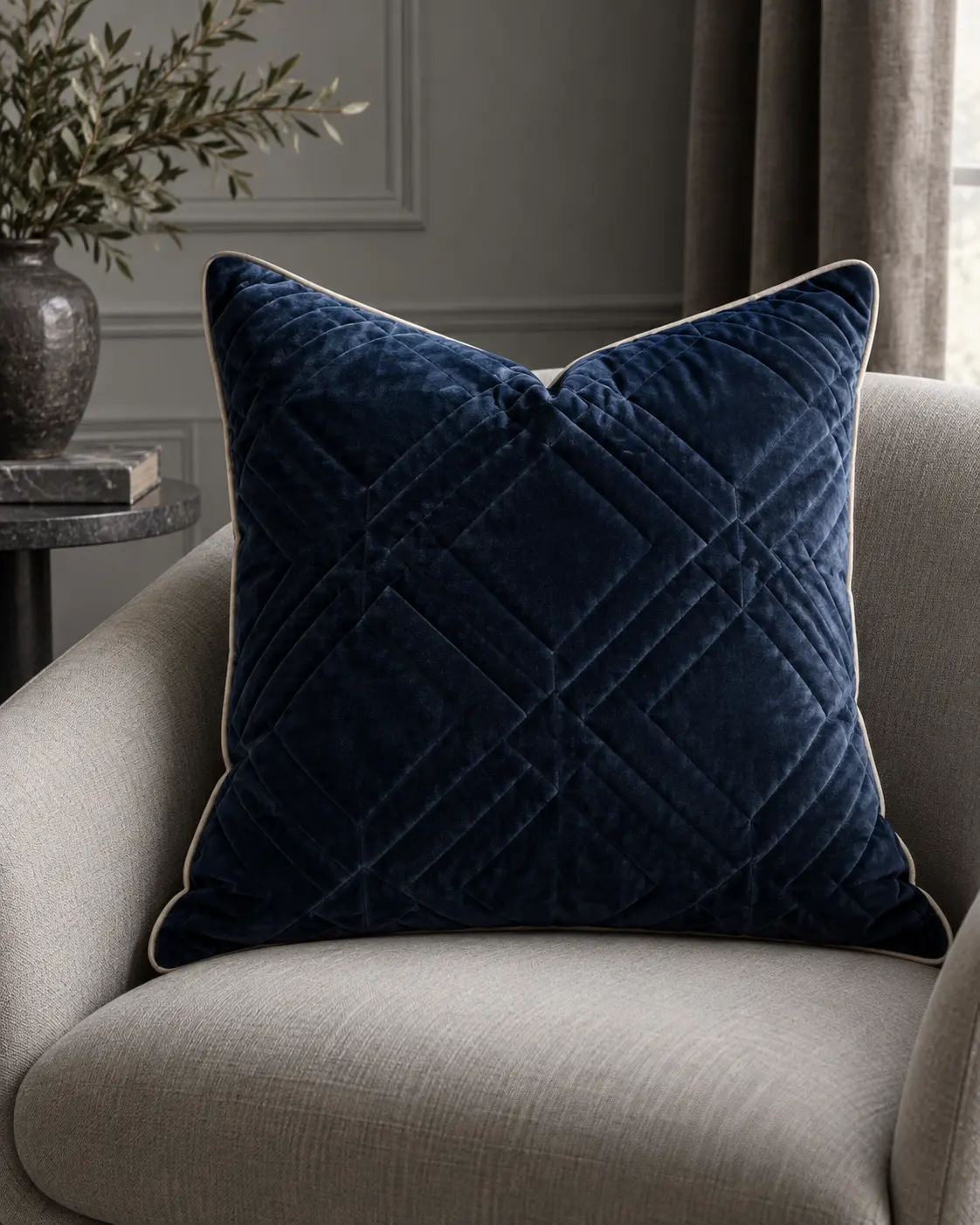
Position: After “Understand the practical ODM workflow”
Caption: An existing platform can be adapted, but its materials, labels and construction still need buyer approval.
AI prompt: Photorealistic premium product styling: coordinated neutral throw pillows with varied textures on a modern sofa, clean catalog-like presentation, no visible logos, natural daylight, refined B2B private-label aesthetic.
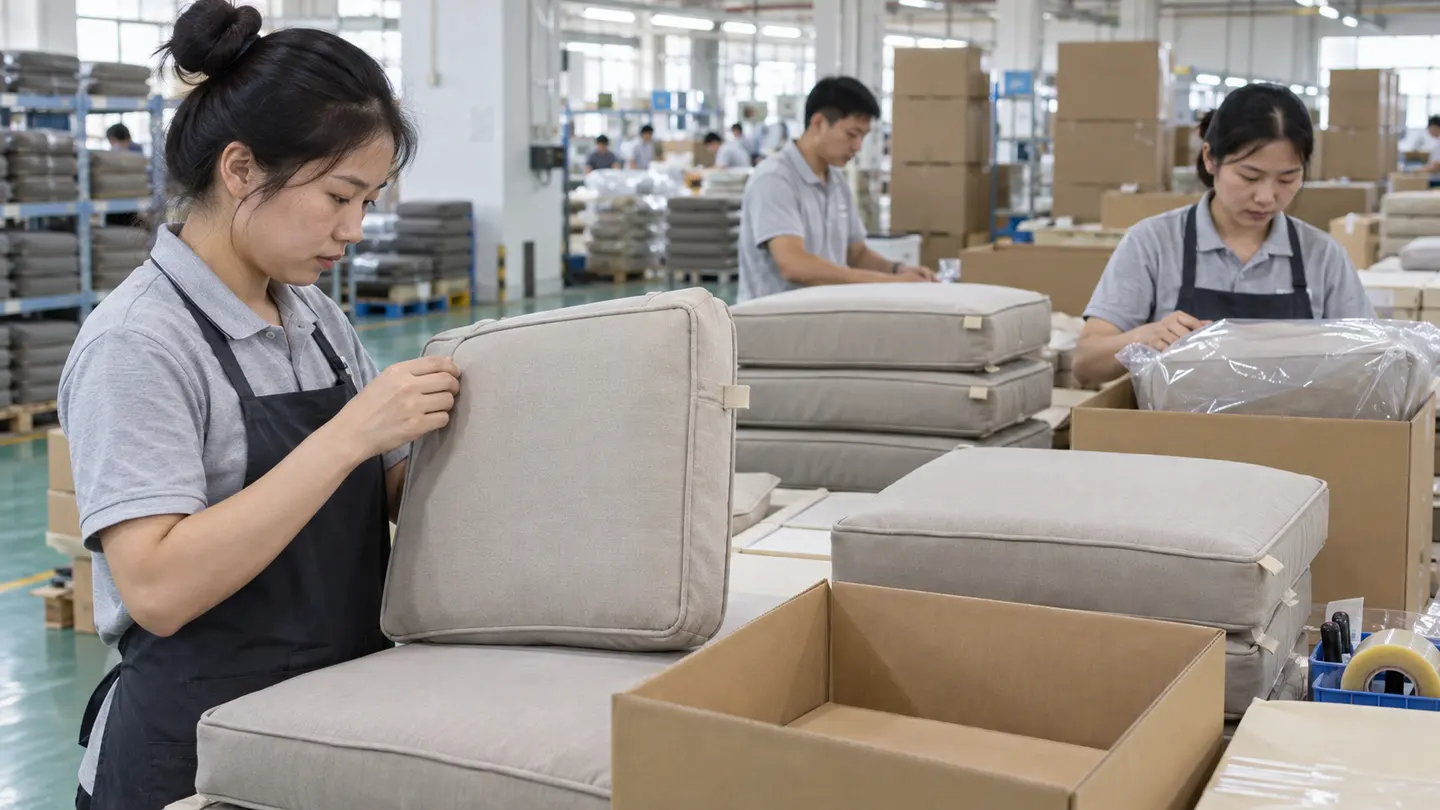
Position: After “Define quality, claims and handover ownership”
Caption: Regardless of model, bulk work is checked against the approved product reference.
AI prompt: Realistic documentary Shenzhen factory photo: Asian quality technician comparing a finished tailored cushion with fabric swatch and non-readable approval sheet, bright clean workstation, authentic textile detail, no logos.
Frequently asked questions
What is OEM cushion manufacturing?
OEM manufacturing produces a cushion to the buyer’s defined design and specification. The buyer typically provides product requirements while the factory reviews, samples and produces to the approved reference.
What is ODM cushion manufacturing?
ODM starts from a manufacturer’s existing product platform or development capability. The buyer may select or adapt it with materials, labels, colours or packaging, but still needs a clear approved SKU.
Is ODM faster than OEM?
It can be faster when the existing product, materials and construction truly suit the requirement. Custom fabrics, labels, printing, packing or other changes can still add sample and material lead time.
Who owns a custom cushion design?
Ownership, confidentiality and exclusivity should be addressed in a suitable written commercial agreement. Do not assume a label change or informal discussion defines ownership.
Do OEM and ODM orders both need samples?
Yes. A physical sample should confirm the final cover, fill, construction, labels and packing before bulk production, even when the base product is an existing ODM design.
Enquiry popup plan
Trigger: Show after 40% scroll, after 30 seconds on page, or on desktop exit intent; suppress after a completed submission.
Popup title: Review your OEM or ODM path
Copy: Share your product idea, design readiness and target quantity. We will send the key development questions to consider.
Fields: Required: Name, Email. Optional: Company, Product Type, Message. Do not request a phone number.
Button: Request Development Review
Start with the development model that fits your brand
Email info@cushionnook.com or use the enquiry form to discuss custom cushion, pillow or outdoor seating development.
Send Your Requirements →