Last updated: September 17, 2026 · 10–12 minute read
Custom Printed Throw Pillows: Artwork, Colour and Production Checklist
Custom printed pillows succeed when creative artwork becomes a controlled production instruction. This guide gives brand, retail and hospitality buyers a practical workflow for files, repeat, placement, colour, fabric, sample approval and shipment inspection.
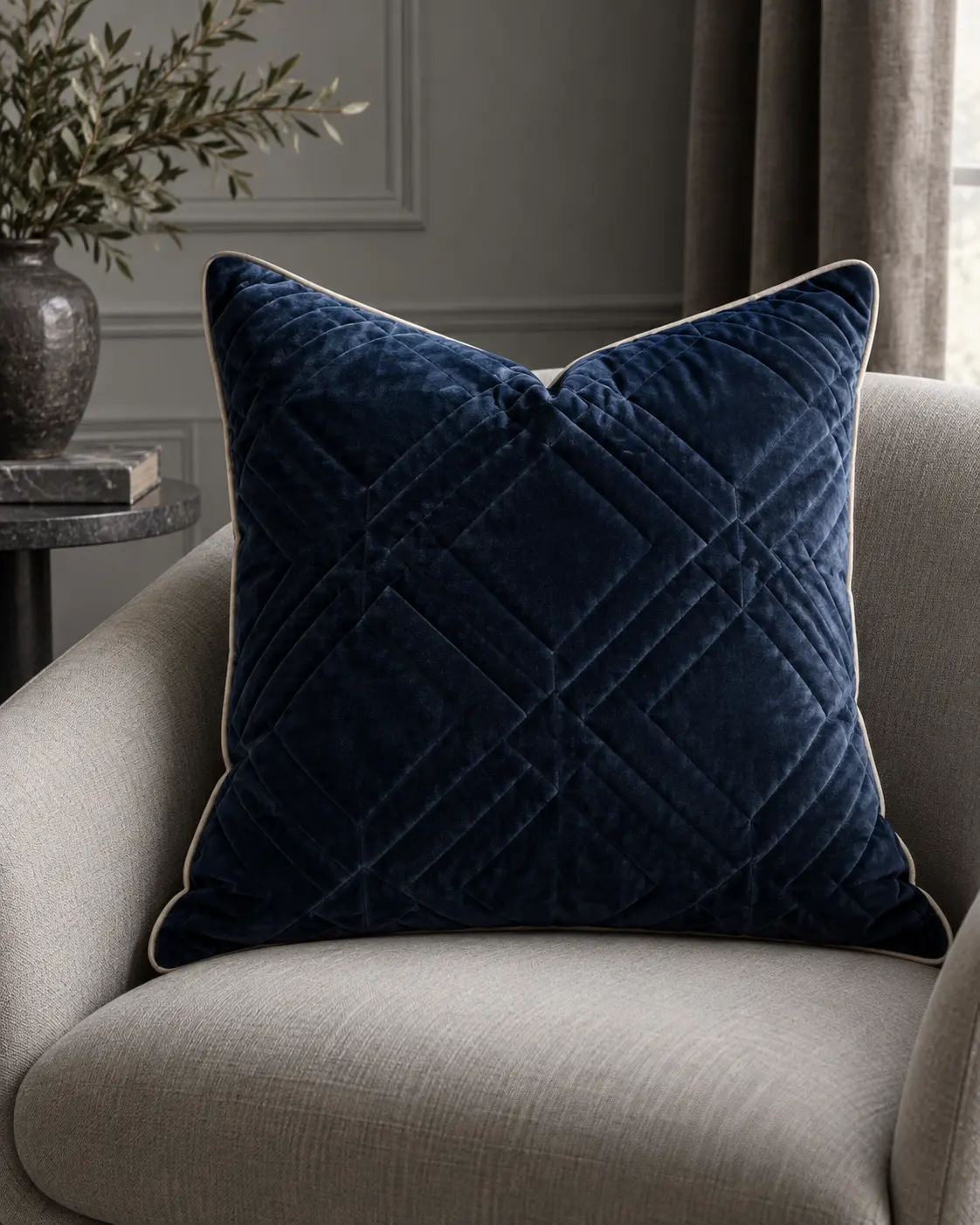
Print artwork, fabric texture and finished pillow construction must be approved together.
Quick answer: what should buyers provide for custom printed pillows?
Provide production-ready artwork, intended print scale, repeat or placement diagram, finished pillow size, cover fabric, front/back requirements, colour reference, zipper and trim details, quantity and destination. The factory should return an artwork review and make a physical proof or finished sample before bulk printing begins.
A visual file is not a complete pillow specification. The same artwork can look different across fabrics, print methods, cover sizes and seam placements. Buyers should approve the finished product under appropriate light and keep the approved proof with the SKU record.
1. Create an artwork pack that production can use
Send the original editable file where possible, along with a print-ready export and a clear version name. Include colour references, scale, repeat, placement, front/back artwork, orientation, crop rules and any areas that must not be covered by seams, zippers or labels. Avoid sending a low-resolution image or social-media screenshot as the only reference.
For an all-over pattern, state the repeat size and whether matching across the front, gusset and back is required. For a centred motif, show its position relative to the finished cover and seam allowance. For stripes or directional designs, state which way the fabric should run. These instructions influence fabric consumption, cutting yield and MOQ as well as the finished appearance.
Artwork handover checklist
- File name, revision and editable source file where available.
- Finished pillow dimensions and print area.
- Artwork scale, repeat, placement and front/back orientation.
- Colour references and expectations for physical proofing.
- Fabric code, print method discussion and surface/texture expectations.
- Seam, zipper, piping and label exclusion zones.
2. Choose fabric and print method together
Print quality is affected by the cover fabric. Weave, pile, texture, colour, weight and finish influence how linework, fine detail and colour appear. A design that looks sharp on a smooth fabric may read differently on a textured woven. Discuss the intended fabric before selecting or approving a print method, and request an actual proof on the proposed material.
Do not assume that a named print method gives the same result on every fabric. Ask the supplier to describe the production route, proofing stage, colour-control approach and relevant minimums for the actual artwork and material. If a customer specifies a colour target, agree how it will be referenced and assessed. Avoid promising a screen-to-textile match without a physical approval process.
3. Control colour with a physical approval reference
Screen colour is not a final textile colour reference. Monitors vary, and fabric absorbs or reflects colour differently from paper or digital displays. Use a recognised colour reference where appropriate, then approve a printed strike-off or finished sample on the proposed fabric. View it in the lighting most relevant to the product: retail, hotel interior or daylight.
Record the approved artwork revision, fabric code, colour reference, print proof date and any accepted variation. For a collection, keep the samples together so adjacent colours are evaluated as customers will see them. For reorders, confirm the material and artwork files remain current instead of relying on a memory of the first order.
4. Sample the complete pillow, not only a printed panel
A printed panel can confirm colour and motif, but a finished pillow confirms the production reality: print placement after cutting, seam allowance, pattern direction, zipper position, insert fit, corner shape and packed appearance. Use a full sample to check whether the motif remains centred and whether any key visual element is too close to a seam or corner.
For a range with multiple sizes, check each size. Scaling artwork can change visual balance, and a repeat may cut differently on a rectangle than on a square. Record which elements are shared across SKUs and which require independent approval. The custom sample guide explains how to consolidate these decisions into a controlled reference.
5. Plan cutting and yield before confirming the order
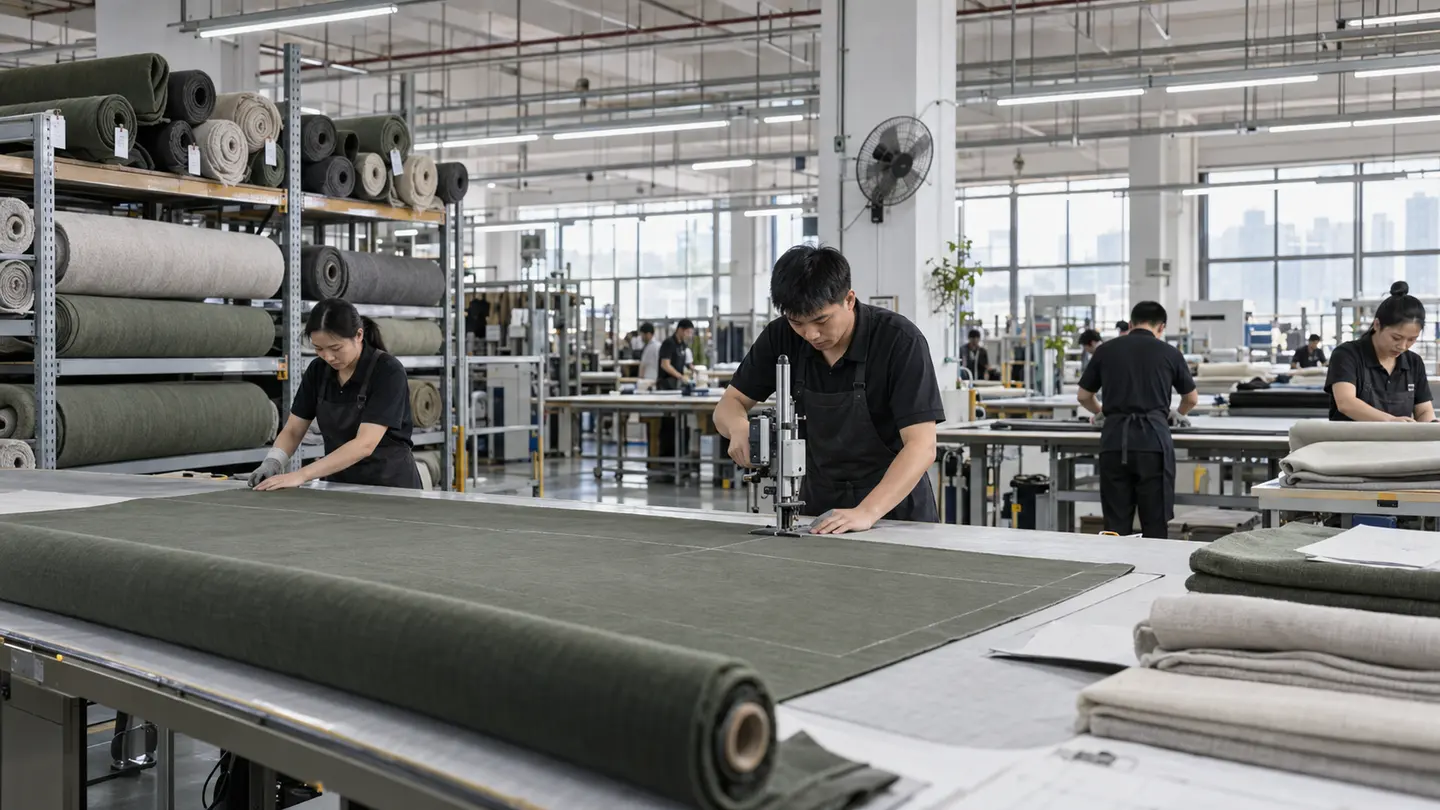
Artwork placement and repeat influence fabric yield. A large motif that must be centred on every pillow can generate more cutting loss than a non-directional pattern. Stripes and plaids may need matching across panels. These choices can affect material consumption, lead time and the practical MOQ. Ask the factory to identify the assumption in its quotation rather than discovering it after the artwork is approved.
Where budget or launch volume is limited, prioritise the artwork details that customers will actually notice. A consistent front placement may matter more than hidden back-panel matching; a simpler repeat can support a lower-risk first run. Use our MOQ guide to structure the material and SKU discussion.
6. Carry the artwork reference into production quality control
Before bulk printing and cutting, confirm the current artwork file, fabric code, approved proof and production placement rule. Factory testing and first-off checks should compare print scale, direction, colour appearance, seam placement, zipper position and fill profile with the golden sample. If a different fabric lot or print run is involved, inspect it before it becomes a full production issue.
During shipment inspection, sample finished pillows for motif orientation, obvious colour or print defects, construction, label and packing accuracy. Use the approved physical reference and written acceptance criteria. An inspector cannot judge a placement difference fairly without knowing whether the motif was intended to be centred, repeated or randomly cut.
PROJECT SUPPORT
Need a production-ready printed pillow brief?
Send your artwork, sizes, fabric direction and quantity. We will help identify the proofing, placement, material and MOQ decisions before sampling.
Send Artwork for Review →7. Package printed products without damaging the presentation
Packaging should protect the printed face and support the retail or project experience. Decide whether the print should face outward, whether an insert card is required, and how the pillow recovers after any compression packing. Avoid placing labels, adhesive or folds where they may mark a sensitive surface. The master carton should identify SKU and quantity clearly for receiving.
For private-label collections, connect the artwork record to label and packing files. That makes a reorder more dependable and ensures that a colour, motif or SKU name is not silently changed. See our private-label pillow guide for the complete SKU workflow.
Common custom-print mistakes
- Providing a low-resolution image with no scale or repeat instruction.
- Approving a screen image instead of a print proof on the final fabric.
- Ignoring seam allowance, zipper location and pattern direction.
- Assuming one sample approval applies to all pillow sizes.
- Leaving cutting yield and print MOQ out of the quotation.
- Failing to retain artwork version, proof and material code for reorders.
Govern colour and artwork across the full launch cycle
Colour approval should have an owner and a controlled reference. Keep the approved printed proof, fabric code, artwork revision and viewing conditions with the SKU file. If a buyer uses a colour standard, record how it was used during proofing; do not treat a screen capture as the governing reference. This gives the factory a practical target and gives the buyer an auditable basis for future reorders.
For a range with several prints, create a simple artwork register showing file name, revision, scale, repeat, front/back use, fabric, proof status and approved sample. Link the register to labels and packing so a correct-looking pillow is not shipped under the wrong SKU or artwork name.
Control print batches before they become a shipment issue
Before bulk cutting, compare a representative production print with the approved proof. Review colour appearance, scale, repeat, direction and obvious defects under relevant lighting. If material lots or print runs change, document the review rather than assuming all output is identical. A quick first-off check is more useful than discovering a placement or colour issue after hundreds of covers are sewn.
During factory testing, keep the approved physical reference at the quality station. Inspect finished pillows for motif position after sewing, not only the flat printed fabric. This distinguishes a printing issue from a cutting or construction issue and makes corrective action more focused.
Use customer feedback without losing version control
After launch, collect feedback on colour perception, print durability, pack presentation and returns by SKU. If a change is made, issue a new artwork or product revision and decide whether existing stock, photography or product copy needs updating. Do not silently alter a print on a reorder; a small change can be meaningful to a retailer or repeat customer.
Saving the approved proof, production sample and inspection images creates a credible history for the collection. It lets a brand improve a design deliberately while preserving the ability to reproduce a successful item accurately.
Control color and scale before committing bulk fabric
Printed-pillow projects often fail at the translation between a digital file and a finished textile object. Screens, lighting and fabric texture can change how a color or tonal gradient is perceived, while a pattern that looks balanced on a monitor can sit awkwardly once it is cut into a small square or lumbar shape. Before bulk material is released, approve a representative strike-off or sewn sample under the lighting most relevant to the buyer’s application. Review the actual cover face, not only a flat print: check scale, repeat position, crop, front-versus-back orientation, seam allowance and how the design reads once the insert fills the corners.
Define an approval hierarchy for artwork. The final product file should identify the source file name and revision, dimensions, print method where relevant, color references or physical standard if used, repeat direction, artwork placement on each panel, label position and approved sample photos. If a pattern includes text, logos or a directional motif, show a clear front/back/side diagram. This reduces the risk of a technically accurate print being cut upside down or offset because the sewing team did not receive a usable placement reference.
Account for production variation without making false promises
Textile printing and sewn construction involve normal sources of variation. Buyers should ask how the supplier manages shade grouping, panel alignment and inspection rather than assuming every pillow will be identical at a pixel level. For repeat patterns, agree which visual alignment is essential and which small shift is acceptable because of cutting and seam construction. For solid printed backgrounds or sensitive brand colors, set a practical approval route and retain the approved physical reference where available.
If more than one production run is expected, record the approved color and material information alongside the SKU. A later order may involve a different production lot, and the buyer should decide how it will be reviewed before promising exact continuity to a retailer or project client. Honest control language—approved sample, defined artwork revision, checked face direction and managed shade assessment—is more credible than an unqualified claim of perfect color matching.
Inspect the finished product as a branded item
Factory inspection should look beyond whether the cover has been sewn. Check that the right artwork revision is on the right SKU, the front panel faces correctly, print placement is consistent with the sample, corners are filled, seams are neat and labels are readable and correctly located. Confirm packing as well: a compressed or poorly protected printed pillow can arrive with creases, transfer marks or an incorrect barcode, even when the cover itself is acceptable.
Keep a few controlled photographs from the approved sample and shipment inspection with the project record. They support customer-service questions, reorder preparation and catalog consistency. Combined with clear artwork governance and a realistic review of printing variables, this gives a private-label buyer a reliable path from creative file to a finished pillow that represents the intended brand.
Prepare image and content references for the sales channel
After the physical sample is approved, create a small content pack that uses the same revision: front and back product photographs, close-ups of texture or print placement, dimensions, care wording, SKU, cover and insert description, packing information and any appropriately qualified material statement. This helps marketing, sales and customer service refer to the same product that production is making. It also avoids a common private-label issue in which a catalog image shows an earlier artwork crop or label position after the factory has moved to a later approved version.
For repeat production, review the content pack together with the product file. If a fabric lot, artwork, insert, label or pack changes, decide whether new photography or updated copy is required before the item is offered for sale. Keeping product representation synchronized with production records is a straightforward way to support trustworthy buyer communication without overstating color, performance or availability.
Conclusion: turn artwork into a production reference
Custom printed pillows require controlled creative and technical decisions. Supply production-ready files, choose fabric and print method together, approve colour physically, test the completed pillow, document placement rules and inspect against the retained reference. This protects both the design intent and the commercial success of a custom collection.
Photography plan for this guide
Use original factory photography where possible. The prompts below are production references for realistic imagery, not claims about a specific order.
Position: Below the introduction
Caption: Print artwork, fabric texture and finished pillow construction must be approved together.
AI prompt: Photorealistic premium interior editorial: custom printed throw pillows with refined abstract botanical artwork on a contemporary sofa, natural fabric texture, warm neutral living room, no people, no brands or readable text, high-end B2B design style.
Position: After “Plan cutting and yield before confirming the order”
Caption: Placement markers and fabric direction are confirmed before printed panels are cut.
AI prompt: Documentary realistic Shenzhen factory photo: Asian textile worker aligning printed upholstery fabric with subtle abstract pattern on cutting table using paper templates, clean workshop, authentic textile detail, no readable artwork text or logos.

Position: After “Carry the artwork reference into production quality control”
Caption: A technician compares the print placement and colour appearance with the approved proof.
AI prompt: Photorealistic quality-control photo in Shenzhen: Asian inspector comparing a finished printed throw pillow with a small non-readable colour proof and fabric swatch, bright clean worktable, authentic fabric texture, no logos.
Frequently asked questions
What file format is best for custom printed pillows?
Provide the editable source file when available plus a high-resolution production-ready export. Ask the printer which format, colour profile and resolution it requires for the selected process and fabric.
How do I ensure printed pillow colours match my brand?
Use a defined colour reference, approve a physical proof on the final fabric under relevant lighting and retain the approved sample and artwork revision. Do not rely on screen colour alone.
Can I use the same artwork on different pillow sizes?
Yes, but each size should be reviewed for scale, placement, seam allowance and visual balance. State whether artwork is scaled, cropped or repeated for each SKU.
Why does custom print affect pillow MOQ?
Artwork and fabric choice can introduce print-run minimums, proofing requirements and cutting loss for matched or centred motifs. Ask for these constraints separately from the finished pillow MOQ.
What should be inspected before printed pillows ship?
Check fabric and artwork revision, print placement and orientation, visible print defects, colour against the approved reference, construction, labels, SKU mix and packing.
Enquiry popup plan
Trigger: Show after 40% scroll, after 30 seconds on page, or on desktop exit intent; suppress after a completed submission.
Popup title: Review custom pillow artwork
Copy: Share your artwork, intended pillow size and fabric direction. We will send the production fields to confirm before sampling.
Fields: Required: Name, Email. Optional: Company, Estimated Quantity, Message. Do not request a phone number.
Button: Request Artwork Review
Develop custom printed pillows with controlled colour and placement
Email info@cushionnook.com or use the enquiry form to begin a printed pillow sample and quotation discussion.
Send Your Requirements →