Last updated: September 17, 2026 · 10–12 minute read
How to Choose a Custom Cushion Manufacturer in China
Choosing a custom cushion manufacturer is less about finding the lowest quotation and more about proving that a supplier can repeat your approved product at scale. This buyer guide gives procurement teams a practical qualification sequence for custom seat cushions, outdoor cushions and private-label throw pillows.
A technician reviews cut components against the approved product brief before sewing begins.
Quick answer: how should you choose a custom cushion manufacturer in China?
Choose a manufacturer by verifying its ability to make your product, not by judging a generic factory presentation. A dependable supplier can review a dimensioned brief, explain material and construction trade-offs, make a representative physical sample, document changes, inspect bulk production against that sample, and prepare export packing that matches the destination and receiving workflow.
For most B2B projects, the right order is: define the application, make the quotation comparable, validate a sample, agree written acceptance points, then control production and shipment inspection. This sequence gives buyers evidence before the largest financial commitment is made.
1. Start with the cushion's actual application
A cushion is a system of cover, filling, seams, closure, attachment and the furniture underneath it. The application determines how that system should be specified. A boutique hotel window seat may prioritize a tailored profile and removable cover; a restaurant booth may need repeated cleanability and seam placement that avoids the front edge; an outdoor poolside cushion needs a plan for moisture, drainage, storage and fading exposure. A decorative retail pillow has another set of risks: artwork placement, insert recovery, brand label and presentation after unpacking.
Ask the project team to write a one-paragraph use statement before requesting price. Include who will use it, whether it is indoors or outdoors, expected traffic, the supporting frame or deck, cleaning method, replacement cycle and delivery location. This avoids a common failure: approving attractive fabric or foam samples without considering how the assembled cushion will perform on the intended furniture.
What to send with the first enquiry
- Finished dimensions in millimetres or inches, including thickness and the measurement points that matter.
- Photos or drawings of the supporting bench, chair, sofa or sun lounger; show corners, curves, ties, straps and attachment locations.
- Cover fabric reference, colour target, desired texture, printing or embroidery requirements, and whether the cover must be removable.
- Filling preference or the comfort objective: structured seat support, softer back support, quick-dry outdoor use or decorative loft.
- Quantity by SKU, target delivery date, country of import, retail or project packing needs, and any known documentation request.
A supplier that turns these details into a clear assumption list is easier to evaluate than one that answers with a single price only. You can use our custom cushion quote checklist to prepare the enquiry.
2. Decide whether you are speaking with a manufacturer, a trader, or both
There is nothing inherently wrong with a trading company. It may provide sourcing coordination, communication support or a broader product range. The important point is transparency: who owns the technical review, sample control, production scheduling, quality checks and response when a specification changes?
Ask each prospective supplier to describe the production route for your cushion: fabric inspection and cutting, sewing, filling, closing, final measurement, packing and dispatch. Ask where any outsourced operation takes place, such as specialist printing, embroidery, foam conversion or testing. A clear answer lets the buyer assign responsibility and plan enough lead time. A vague answer makes a low quote harder to compare.
For an in-person or video factory review, focus on the project workflow rather than on a showroom. Look for traceable material identification, cutting references, work instructions, sample storage, in-process checks and a defined packing area. Ask who signs off a first-off piece, who can stop production if it differs from the approved sample, and how revised specifications reach the sewing line.
3. Make every quotation comparable before comparing price
A meaningful quotation describes the same finished product. If one supplier assumes a lighter cover, a different foam build, a simpler closure or basic domestic packing, the price gap may reflect scope rather than efficiency. Ask for a line-by-line summary of cover, filling, trims, construction, labelling, individual protection, carton configuration, Incoterm and quotation validity.
For cushions with several sizes or colours, request a SKU table. It should show the finished size, material code, colour or artwork reference, quantity, packed quantity per carton and net/gross weight where known. It is also useful to ask which elements are subject to a material supplier's minimum: fabric colour, print run, foam conversion, woven label or custom carton. The finished-product MOQ is often not the only minimum affecting cost and timing.
Questions that expose hidden assumptions
- Is the quoted cover fabric named by construction and supplier code, or only by a generic description?
- Is the foam or filling identified by type, density or weight, thickness and intended position?
- Are zipper type, piping, ties, non-slip underside, quilting and label placement included?
- What packing protection is assumed, and can compressed packing change product recovery or carton dimensions?
- What is excluded: testing, third-party inspection, destination labels, artwork setup, duty or freight?
Do not force a supplier to promise an impossible delivery date just to win the order. A realistic schedule should allow for material confirmation, sample revision, bulk material arrival, first-off approval, production, shipment inspection and freight booking. Our lead-time planning guide maps these dependencies in more detail.
4. Treat sampling as a technical checkpoint, not a photo opportunity
The sample is where design intent becomes a tangible product. It should verify dimensions, fit, cover tension, seam alignment, fabric direction, pattern placement, zipper access, piping, attachment, fill profile and comfort on the actual frame. Photos are helpful for communication, but they rarely reveal how a cushion fits a curve, whether a zipper catches, or how seams sit under use.
Ask for the sample record to identify the drawing revision, fabric and trim codes, filling construction, finished measurements and any deviations. If a requested material is unavailable for the first prototype, label it clearly as a development substitute; do not let a substitute sample become the reference for bulk production by accident. Retain the approved sample or a signed, dated photo-and-specification set as the golden reference.
A useful sample review has two outputs: an approval decision and a change list. “Looks good” is not enough. Specify whether changes affect cost, lead time or construction, then request a revised quotation or confirmation before release. See our sample approval process for a practical revision checklist.
5. Review material and construction as one product system
Buyers often evaluate fabric and foam separately, but end users experience the assembled cushion. Cover weight and stretch influence the visible profile; foam density, firmness and thickness influence support and recovery; the deck or frame changes how that support feels. A narrow bench cushion that sits on a hard panel may need a different build from a deep lounge cushion on webbing, even when the same cover fabric is used.
For outdoor cushions, “waterproof” and “water-resistant” must not be used as interchangeable finished-product claims. A cover can shed water while moisture still enters through seams, zippers, fabric cut edges or a slow-drying core. Ask the manufacturer to explain the moisture path: cover construction, closure protection, filling, drainage or venting, drying expectation and care instructions. Our outdoor moisture guide helps procurement teams ask the right questions.
For strength-related fabric decisions, agree the test method and performance target with the fabric supplier or test laboratory rather than copying an isolated number from another project. ASTM maintains current textile standards, including methods used to evaluate fabric strength; the applicable test and pass criteria depend on the material, product and market. See the ASTM textile standards catalogue for current references.
6. Put quality control into the production plan
Final inspection is valuable, but it cannot efficiently correct a construction decision that was never controlled. A stronger process connects four points: approved materials, approved first-off piece, in-process workmanship checks and pre-shipment inspection. The checks should use the same written specification so the factory, buyer and any independent inspector are judging the same product.
For custom cushions, a typical factory testing and control routine may include confirming incoming material codes, checking cut-piece orientation and dimensions, comparing the first finished item with the retained sample, reviewing seam and zipper workmanship, measuring finished size at agreed points, checking fill distribution, and verifying labels and carton marks. The correct scope depends on the order; it should be agreed before production begins, not invented after a problem appears.
Write tolerances that are practical for the material and shape. Long, curved, filled or quilted items may need different measurement logic from simple square covers. Document where a measuring tape starts and ends. For visual standards, identify acceptable and unacceptable examples for loose threads, pattern alignment, shade variation, fabric defects, oil marks, piping joins and label position.
PROJECT SUPPORT
Need to compare supplier quotations on the same basis?
Send a drawing, product use, target quantity and destination. We will return a structured sampling and quotation checklist so material, construction, packing and timing assumptions are visible.
Send Your Requirements →7. Plan compliance and documentation before bulk material is committed
Compliance is destination- and use-specific. A cushion sold as part of upholstered furniture, a loose decorative pillow and an outdoor seat pad may fall under different rules. Buyers should identify the importing market, product classification, intended use, material construction and requested evidence early, then confirm scope with the relevant authority, customer or qualified testing partner.
For example, the U.S. Consumer Product Safety Commission explains the flammability framework it administers for certain upholstered furniture under 16 CFR part 1640 and distinguishes it from California's TB 117-2013. This does not establish that a particular cushion qualifies, because product scope and materials matter. Use the CPSC's upholstered furniture FAQ and Flammable Fabrics Act guidance as starting points, then obtain market-specific advice for your item.
Ask the factory what it can provide directly, what must come from a material supplier, and what requires independent testing. Avoid statements such as “compliant” without naming the product, construction, standard, test report and date. Our documentation planning guide explains how to request evidence without overstating it.
8. Make shipment inspection and handover part of the product
Before dispatch, match the goods to the approved reference and purchase order: SKU quantity, size, colour, fabric direction, workmanship, labels, accessories, packing protection and carton marks. Open a sensible sample of cartons to verify that the packed product is identified correctly and protected for the transport mode. If vacuum or compression packing is used, agree the recovery expectation and care note in advance.
For sectional cushions, add an installation preparation sheet with a simple diagram, orientation labels and hardware count if relevant. This prevents a receiving team from treating similar-looking pieces as interchangeable. A shipment inspection should also confirm carton count, visible carton condition and any destination marking requirements before goods are released to the forwarder.
Keep a compact project file after shipment: signed specification, sample photos, material list, inspection report, packing list, commercial documents and final care or installation information. It makes reorders, replacement covers and issue analysis much easier months later.
Common red flags when qualifying a cushion supplier
- A price is given without a written list of assumed cover, filling, trims and packing.
- The supplier cannot identify who owns sample approval, first-off sign-off or final inspection.
- A physical sample is dismissed even though fit, comfort or construction is custom.
- Material substitutions are proposed without a new sample or documented buyer approval.
- Compliance is promised broadly, but no standard, scope, document source or report date is named.
- Lead time excludes sample revision, materials, inspection or freight booking.
None of these points automatically disqualifies a supplier; they signal where you need a clearer answer. The goal is not to create unnecessary administration. It is to make product decisions visible early enough to control cost, quality and delivery.
Conclusion: choose evidence over promises
The strongest custom cushion supplier is the one that can turn your application into a controlled product brief, show how the sample becomes the bulk reference, and give the buyer a clear inspection and handover path. Start with a defined use case, compare complete quotations, approve a physical sample, agree acceptance criteria and release production only when the evidence matches the order. That is a more reliable procurement method than selecting a supplier on headline price or generic factory claims.
Supplier-qualification scorecard: a practical buying method
Before selecting a supplier, turn the questions in this guide into a short scorecard. The objective is not to make a factory appear perfect; it is to compare evidence consistently. Score each candidate only after receiving project-specific answers. A supplier may have an impressive facility but still be a poor fit for a custom collection if the sample workflow, material traceability or communication ownership is unclear.
Start with product understanding. Can the supplier restate the application, dimensions, cover, filling, attachment and cleaning conditions without changing their meaning? Next, assess development control: is there a named person who reviews drawings, records sample changes and signs off a first-off piece? Then assess production control: can the factory identify materials at incoming inspection, deliver the approved reference to the line and inspect finished cushions with agreed measurement points?
Suggested scorecard categories
- Brief interpretation: the supplier identifies missing information and lists assumptions instead of quoting an undefined product.
- Sample control: drawings, material codes, revisions and approval status are traceable; temporary substitutes are clearly labelled.
- Material discipline: the factory can name cover, filling, trim and packing sources and explain how alternatives are handled.
- Production ownership: a buyer knows who approves first-off, monitors in-process work and resolves a deviation.
- Shipment readiness: labels, section maps, packing and inspection records are planned before the dispatch date.
Weight the scorecard around your project risk. A custom printed retail pillow may place more weight on artwork proofing, label accuracy and packed presentation. A curved hotel bench cushion may place more weight on template control, fitted-sample approval and installation marking. Outdoor seating may place more weight on moisture-management construction and care handover. This makes the supplier-selection conversation specific to the product rather than a general factory comparison.
How to run a useful supplier review meeting
Send the same brief to every shortlisted supplier. Ask each to return a quotation assumptions list, sample route, critical material plan, quality-control points and preliminary delivery milestones. During a video call or factory visit, ask the team to show the relevant work flow: material identification, cutting preparation, sewing, filling, inspection and packing. You are looking for a coherent connection between the answer on paper and the process in front of you.
After the meeting, document open decisions. If a supplier offers a lower price based on a different fill, lighter cover or simpler carton, record the difference as a commercial option—not as an invisible change. Select the supplier only when product, evidence, price and schedule describe the same order. This discipline gives the buyer a defensible decision record and gives the factory a clearer basis for a successful sample.
Photography plan for this guide
Use original factory photography where possible. The prompts below are production references for realistic imagery, not claims about a specific order.
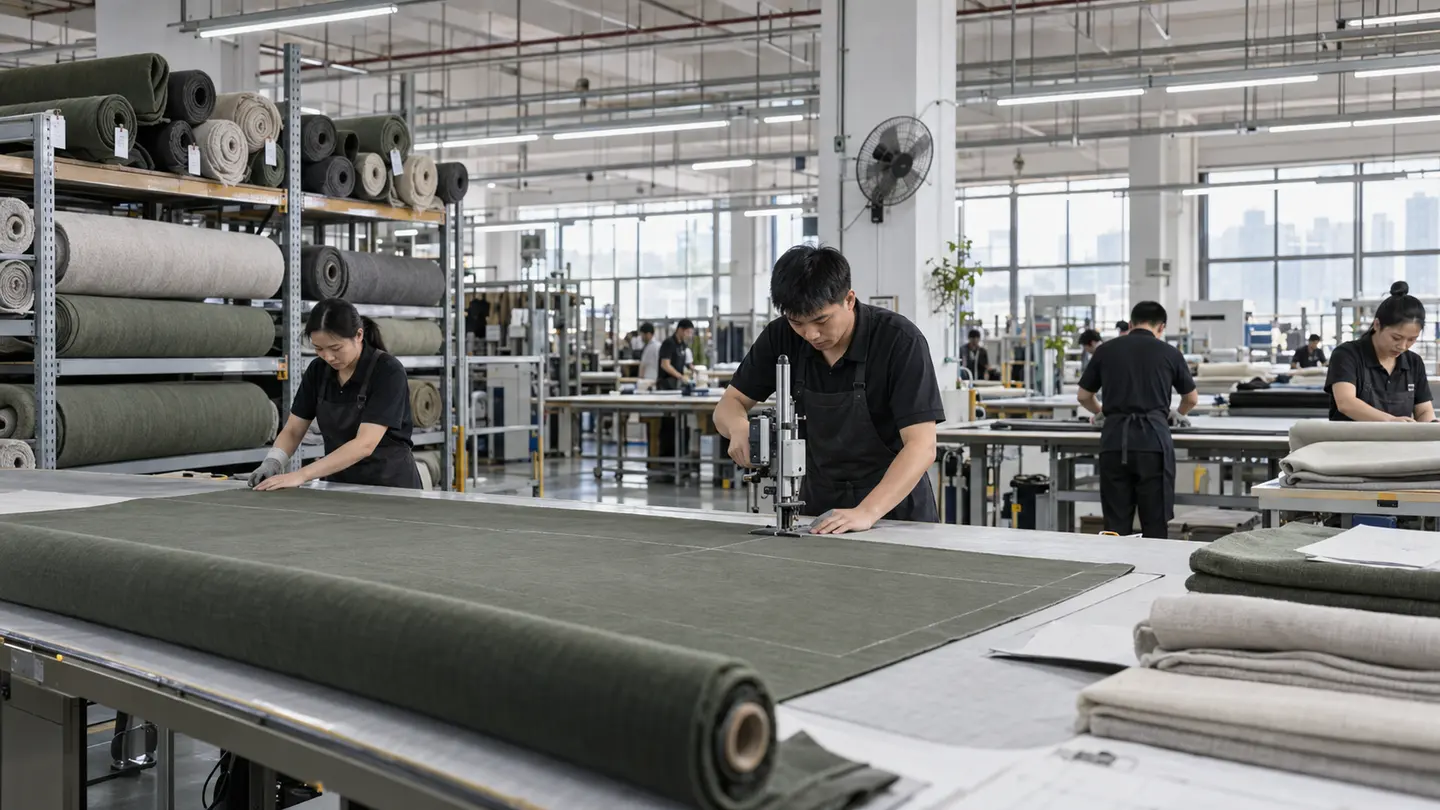
Position: Below the introduction
Caption: A technician reviews cut components against the approved product brief before sewing begins.
AI prompt: Ultra-realistic documentary factory photography in Shenzhen, China: Asian textile technician in a clean cushion workshop reviewing cut upholstery fabric components beside a dimensioned paper drawing, natural window and overhead light, authentic industrial tables, visible fabric texture, premium B2B manufacturing editorial style, 16:9, no logos, no readable text, no CGI look.

Position: After “Put quality control into the production plan”
Caption: A first-off cushion is measured against agreed points before the bulk run proceeds.
AI prompt: Photorealistic quality-control photograph in a modern Shenzhen cushion factory: Asian quality inspector using a tape measure and checklist to inspect a finished tailored seat cushion on a worktable, neutral upholstery fabric, natural skin tones, documentary lighting, crisp textile detail, no logos, no text overlays, editorial B2B photography.

Position: After “Make shipment inspection and handover part of the product”
Caption: Finished cushions are protected, identified and checked before export-carton release.
AI prompt: Realistic export packing documentary photo in a Shenzhen soft-furnishing factory: finished custom cushions protected with clear polybags and corner protection beside plain export cartons, Asian warehouse staff checking carton labels with clipboard, clean organized dispatch area, authentic textures, soft daylight, no visible brand names or readable text, professional B2B photography.
Frequently asked questions
How do I verify whether a cushion supplier is a real manufacturer?
Ask for a project-specific production route, the location of each key operation, the person responsible for sampling and quality control, and a video or visit focused on work-in-process. A transparent supplier can explain what it makes itself, what it outsources, and how your approved reference reaches the production line.
What information should I provide for a custom cushion quote?
Provide use case, drawings or dimensions, frame photos, cover material and colour reference, filling or comfort objective, trims, attachment, quantity by SKU, destination, packing needs and requested date. Ask the supplier to list every assumption so quotations can be compared fairly.
Should I approve a sample before placing a bulk cushion order?
Yes, whenever fit, material, printed artwork, construction or comfort is custom. The sample should confirm finished measurements, cover tension, seams, closure, attachment and packed presentation. Keep the approved sample or a signed specification set as the bulk-production reference.
What should happen during a pre-shipment cushion inspection?
Inspect against the approved sample and written specification. Cover size, workmanship, colour reference, fabric direction, labels, SKU mix, quantities, accessories, protective packing and carton marks. Give any inspector the defect definitions and measurement points before the visit.
Can a manufacturer simply say that a custom cushion is compliant?
No. Compliance depends on the destination, product scope, intended use, construction and applicable evidence. Request the named standard or regulation, the material or product covered, report details and any scope limitations; obtain qualified market-specific advice where necessary.
Enquiry popup plan
Trigger: Show after 40% scroll, after 30 seconds on page, or on desktop exit intent; suppress after a completed submission.
Popup title: Get the supplier-qualification checklist
Copy: Send your requirements and receive a concise checklist for drawings, samples, material confirmation, quality control and shipment inspection.
Fields: Required: Name, Email. Optional: Company, Project Type, Message. Do not request a phone number.
Button: Send My Requirements
Ready to qualify a custom cushion supplier?
Email your project brief to info@cushionnook.com or use the enquiry form. CushionNook can review the information needed for a sample-ready cushion, pillow or outdoor seating request.
Get a Quote →